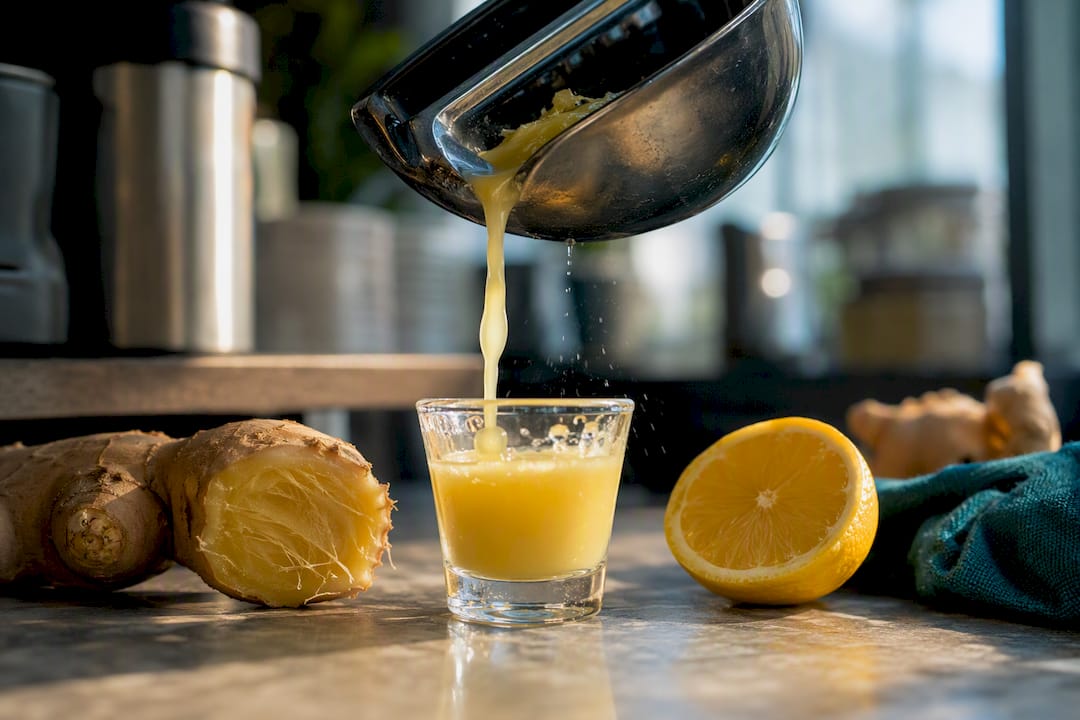


A ginger shot reliably helps with mild nausea and can ease digestion for some people, but it will not “boost” your immune system the way most bottles imply. The strongest evidence backs gut comfort and motion sickness relief. Anyone on blood thinners, diabetes medication, or dealing with reflux should treat concentrated ginger with caution rather than as a daily miracle fix.
TL;DR:
- A ginger shot provides effective relief for nausea and reduces bloating but offers limited proven benefits for immune boosting or inflammation.
- Most evidence supports its use for motion sickness and gastrointestinal comfort, with weaker links to blood sugar or inflammatory effects.
- Start with half a shot to assess tolerance, especially if on blood thinners, diabetes medication, or with gastrointestinal issues.
- Homemade ginger shots allow better control of ingredients and potency compared to commercial options, which often contain added sugars and reduced nutrients.
- Commercial shots should list ginger as a top ingredient, be cold-pressed when possible, and have low sugar content to avoid overpaying for fruit juice fillers.
Table of Contents
- Ginger Shot Bienfaits Start With What’s Actually in the Bottle
- What the Evidence Actually Supports (and What It Doesn’t)
- When and How Much Ginger Shot Should You Actually Drink?
- Who Should Be Cautious With Ginger Shots
- How to Make a Ginger Shot at Home That You’ll Actually Finish
- Buying Ready-Made Shots Without Getting Fooled by the Label
- The Bottom Line on Ginger Shots
- Why We Serve Fresh Ginger Drinks the Way We Do
- Try a Fresh Ginger Drink With Your Next Order From Wild Foodz by Hotel Entree
- Sources
Ginger Shot Bienfaits Start With What’s Actually in the Bottle
A ginger shot is concentrated fresh ginger juice, usually somewhere between 30 and 60 milliliters, meant to be drunk in one go rather than sipped like tea. That concentration is the whole point. It delivers far more gingerol, the active compound behind most of ginger’s effects, than a cup of ginger tea ever could.
Most recipes add lemon for acidity and vitamin C, apple for sweetness, and sometimes turmeric (curcuma) for its anti-inflammatory reputation. Black pepper and cayenne sometimes join for absorption or a kick, and honey softens the burn.
Fresh homemade shots keep the most heat and bite. Cold-pressed commercial versions come close if made quickly and kept cold, while pasteurized supermarket bottles lose some vitamin C and volatile compounds to heat treatment, even if the ginger itself still delivers benefits.
What the Evidence Actually Supports (and What It Doesn’t)
Nausea relief is where ginger’s reputation is best earned. A wide-ranging systematic review of ginger’s clinical effects pulled together 109 eligible studies and found consistent support for reducing nausea, whether from motion sickness, pregnancy, or recovery from surgery. Only a portion of those trials were rated high quality, so “consistent” does not mean “definitive.”
Digestive comfort has real support too. Ginger appears to speed gastric emptying and ease bloating for some people, which explains why so many people reach for it after a heavy meal.
The anti-inflammatory and metabolic story is more nuanced. Some trials show ginger supplementation improving insulin sensitivity and shifting cholesterol markers in a favorable direction, according to research summarized by Medanta’s patient education team. The catch: those results mostly come from standardized supplement doses, not a random 45 ml shot from a juice bar.
Here’s the callout worth remembering: the same systematic review found the strongest evidence for nausea relief, with weaker support for immune-related claims.
That distinction matters for how you shop:
- Nausea and mild digestive upset: reasonably well supported.
- Inflammation and blood sugar: promising in controlled trials, less certain in shot form.
- “Immune boost”: mostly marketing. Ginger offers antioxidant support, but no food or drink prevents infection outright, a point nutritionists at Muta Santé make plainly when discussing spices marketed for immunity.
When and How Much Ginger Shot Should You Actually Drink?
Dosing is where most people either waste money or upset their stomach. A few ground rules:
- Start small. Half a shot, roughly 15 to 20 ml, is plenty for a first try. Ginger tolerance varies enormously from one person to the next.
- Time it for the win you want. Take it in the morning for a digestive nudge, or about 30 to 45 minutes before travel if motion sickness is the target.
- Skip the evening dose. Ginger has a mild stimulating effect for some people, so late afternoon or bedtime shots can interfere with sleep.
- Consider a short course, not forever. A week or two of daily shots, then a break, tends to be more sustainable than an indefinite daily habit.
- Check with a clinician first if you’re pregnant, on blood thinners, or dealing with ongoing gut symptoms. This isn’t a formality. It’s the single most important line in this whole guide.
Who Should Be Cautious With Ginger Shots
Ginger is not risk-free at concentrated doses. The most common complaints are heartburn, throat irritation, and, if you overdo it, diarrhea. These issues tend to show up with regular use of concentrated shots rather than the occasional cup of tea.
A few groups need to think twice before making this a routine:
- People on blood-thinning medication, since ginger may have mild effects on clotting, according to clinical guidance on ginger shot use.
- People with gallbladder disease, active ulcers, or reflux, who often find concentrated ginger worsens symptoms rather than helping.
- Anyone with upcoming surgery, given the same clotting consideration.
- Pregnant individuals, who should stick to clinician-approved amounts rather than a full-strength daily shot.
- People on diabetes medication should also pay attention. Since ginger may influence blood sugar and insulin sensitivity, stacking it on top of glucose-lowering drugs is worth discussing with a doctor rather than assuming it’s harmless. Monitoring blood sugar for a few days after starting is a reasonable precaution.
How to Make a Ginger Shot at Home That You’ll Actually Finish
Homemade gives you control over concentration, sugar, and freshness that no bottle can match. Here’s a simple version scaled to one 60 ml shot:
- Peel and roughly chop about 15 to 20 grams of fresh ginger root (roughly a thumb-sized piece).
- Juice it with a masticating juicer, or blend it with 30 ml of water and strain through a fine cloth or nut-milk bag.
- Add the juice of half a lemon and a splash of water to reach 60 ml total.
- Stir in a teaspoon of honey if the heat is too sharp on the first try.
- For a curcuma version, add 5 grams of fresh or a half teaspoon of ground turmeric, a pinch of black pepper, and a few drops of olive oil.
That last step matters more than most people realize. Curcumin, turmeric’s active compound, is barely absorbed on its own. Piperine from black pepper combined with a small amount of fat dramatically improves how much curcumin actually crosses into your bloodstream, according to bioavailability research on curcumin. Skip the pepper and oil, and you’re mostly drinking color.
Pro Tip: Add the black pepper to your turmeric shot right before drinking rather than during storage. It keeps the flavor cleaner and avoids sediment settling oddly in the bottle overnight.
Store finished shots in small glass bottles, refrigerated, and use within a few days for best quality. Freezing extra ginger juice in ice cube trays works well if you want to batch-prep for a week.

Buying Ready-Made Shots Without Getting Fooled by the Label
If homemade isn’t realistic every day, reading labels carefully separates a decent commercial shot from a sugary letdown.
- Ginger should appear among the top ingredients, not buried after mainly fruit juices or “natural flavoring.”
- Cold-pressed products generally retain more nutrients than heat-pasteurized ones.
- Watch total sugar per serving. Some products lean heavily on fruit juice for palatability, which investigative reporting on commercial ginger shots has flagged as a common way brands cut costs while charging premium prices.
- Pasteurization extends shelf life but reduces vitamin C and some antioxidant content compared with fresh-pressed juice.
Homemade versions usually cost a fraction of what bottled shots charge per serving, and you decide exactly how much ginger goes in.
The Bottom Line on Ginger Shots
Ginger shots suit people dealing with mild nausea, occasional bloating, or motion sickness who want a fast, concentrated dose without pills. They are not a substitute for medical treatment or a guaranteed shield against illness.
Three rules to keep it simple: start with a half shot before committing to a full one, check your medications first if you take blood thinners or diabetes drugs, and choose fresh or homemade over sugar-heavy bottles whenever you can.

Why We Serve Fresh Ginger Drinks the Way We Do
We build our drink menu around what’s actually fresh that morning, not what has the longest shelf life. A ginger shot with a squeeze of lemon pairs naturally with a lighter breakfast bowl, and when we add curcuma, we make sure there’s a touch of healthy fat nearby, even something as simple as a few seeds, so the turmeric does more than just tint the drink orange. Our vegan bowls and seasonal specials, including the Red Velvet Heart Waffles running through February 2026, follow that same logic: vibrant, prepared fresh, and meant to be enjoyed rather than treated as medicine.
— Mawghan
Try a Fresh Ginger Drink With Your Next Order From Wild Foodz by Hotel Entree
A bottled shot sitting on a supermarket shelf for weeks cannot match what comes out of a juicer that same morning. Wildfoodzbyhotelentree presses fresh ginger and pairs it with vegan bowls, salads, and seasonal favorites made daily rather than stockpiled.

February 2026 brings the Red Velvet Heart Waffles back for Valentine’s Day, and they’re the kind of thing that photographs as well as it tastes, alongside our regular rotation of colorful bowls and specialty drinks. Order through Deliveroo, UberEats, or Takeaway.com, or arrange takeaway directly, and if you’re within 20 miles, self-delivery is on the table too. Curious what a genuinely fresh, colorful meal lineup looks like day to day? Check out our seasonal vegan menu ideas and place an order today.
Sources
- Systematic review of ginger clinical effects — PMC (2020)
- Le gingembre contre les nausées — PassionSanté
- Health benefits of ginger and its nutritional value — Medanta
Leave a Reply