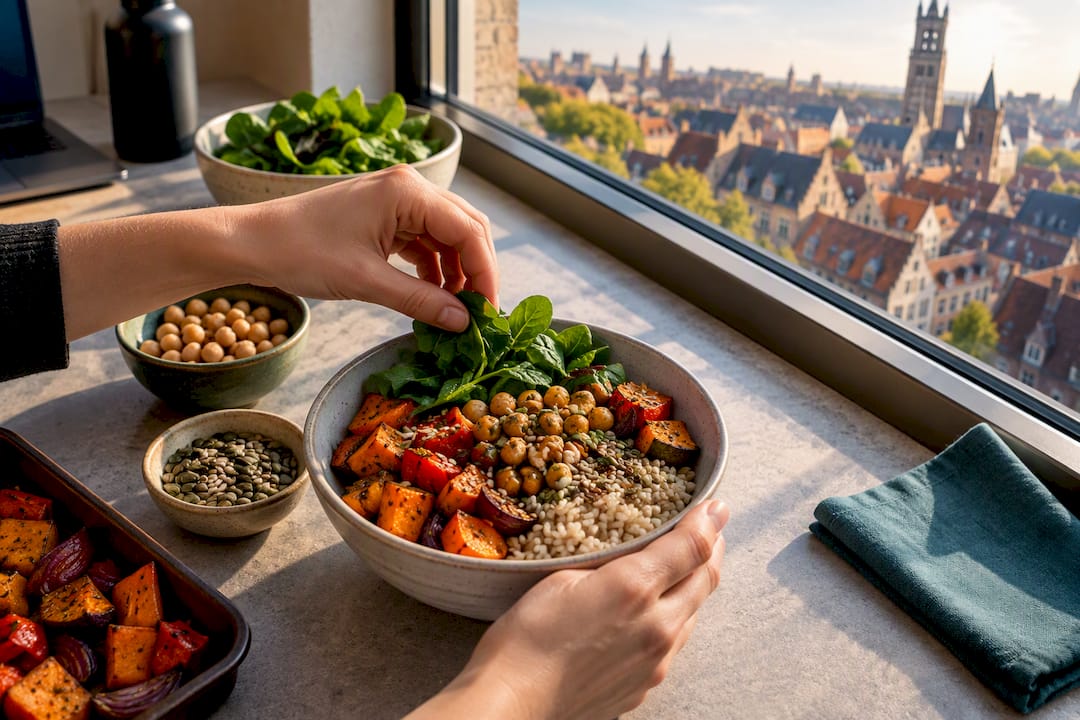


For a quick, healthy office lunch in Bruges, Wild Foodz by Hotel Entree offers fresh bowls, salads, wraps, and vegan-forward options ready for takeaway or delivery. Stick to whole-grain wraps, protein bowls, or seed-topped salads for a lunch that actually keeps you full. Save the seasonal Red Velvet Heart Waffles for a Friday treat. Teams that need centralized billing can pair either option with Deliveroo for Work.
TL;DR:
- Whole-grain bowls with legumes, roasted vegetables, and seed toppings keep office workers full and prevent the afternoon crash.
- Group ordering via platforms like Deliveroo for Work reduces admin, offers centralized billing, and encourages regular, budget-friendly office lunches.
- Belgian guidelines suggest filling half the container with vegetables, a quarter with whole grains, and a quarter with protein for balanced, healthy meals.
- Food safety requires AFSCA authorization and temperature control during delivery, with allergen information clearly available for office orders.
- Occasional treats like seasonal waffles are acceptable, but daily indulgences should be avoided in a health-focused lunch rotation.
Table of Contents
- What healthy office lunch formats work best in Bruges
- How to order and organize lunches for the office in Bruges
- Belgian healthy-lunch guidelines to use when choosing menu items
- Food safety and allergen rules in Belgium that matter for office delivery
- Tips for meal prepping and packing lunches at home for the office
- Local Bruges markets and stores for fresh, healthy lunch ingredients
- Best practices for storing and reheating healthy office lunches
- Why employers in Bruges should invest in healthy office lunches
- Wild Foodz by Hotel Entree: local, healthy takeaway for Bruges offices
- Sources
- FAQ
What healthy office lunch formats work best in Bruges
The best office lunch travels well, holds its texture, and still leaves you alert at 3 p.m. Grain bowls do this reliably: a base of brown rice, farro, or quinoa, a pile of raw or roasted vegetables, a lean protein or legume, and a spoonful of seeds. The combination of fiber, plant protein, and healthy fat slows digestion, which is exactly what prevents the mid-afternoon crash that a white-bread sandwich tends to cause.
Salads earn their place on a desk only when they are built to survive a commute. Dressing on the side, sturdy greens like kale or spinach instead of delicate lettuce, and a hearty topping (chickpeas, grilled chicken, roasted sweet potato) keep a salad from turning into a sad side dish by noon.
Wraps and sandwiches work best on whole-grain bases with a plant-forward spread such as hummus or avocado, paired with a protein and a crunch element like shredded carrot or cucumber. Vegan and plant-protein bowls, including acai and seed-forward options, fit comfortably within the Belgian dietary guidance from the Conseil Supérieur de la Santé on prioritizing plant foods over processed alternatives.
A few formats to keep on rotation for the office:
- Whole-grain bowls with legumes, roasted vegetables, and a seed topping.
- Kale or spinach salads with a hearty protein and dressing served separately.
- Whole-grain wraps with hummus or avocado and a lean protein.
- Vegan acai or seed-forward bowls for a lighter, plant-based option.
Seasonal treats have a place too, as long as they stay occasional. Red Velvet Heart Waffles work well as a Friday add-on or a Valentine’s Day team moment rather than a daily default.
Pro Tip: Order bowls and wraps with dressing or sauce packed separately so nothing goes soggy before lunch.
How to order and organize lunches for the office in Bruges
Individual ordering works fine for small teams or flexible schedules, but it multiplies delivery fees and makes budgeting harder. Group ordering solves both problems once a team passes about five or six people.
Platforms built for this, like Deliveroo for Work, let a team share a single order link, apply meal credits, and receive one monthly invoice instead of a stack of individual receipts. That single change removes most of the admin that usually falls on an office manager.
A simple workflow for teams:
- Set a daily or weekly ordering deadline, typically 45 to 60 minutes before the desired delivery time.
- Share one group order link so everyone orders from the same window instead of triggering separate deliveries.
- Assign a per-person budget and let staff use it flexibly across the menu.
- Confirm the delivery zone and minimum order value with the supplier before locking in a regular schedule.
- Collect dietary restrictions and allergies once, then keep that list on file for every future order.
Employers benefit from a short checklist before rolling this out: gather allergy information in writing, set an opt-in system so no one is charged by default, and confirm that the office address falls inside the supplier’s delivery zone. Batching orders into one or two windows a week also cuts down on wasted food from last-minute cancellations.
Belgian healthy-lunch guidelines to use when choosing menu items
Belgium’s national dietary guidance gives office lunches a clear target to aim for. The Conseil Supérieur de la Santé’s 2025 recommendations suggest around 300 grams of vegetables a day, a figure worth keeping in mind when a takeaway salad or bowl looks light on greens.
The same guidance recommends about 125 grams of whole grains daily, favoring brown rice, whole-wheat wraps, and whole-grain bread over refined versions. Legumes should appear on the plate several times a week, and red meat should stay under 300 grams a week, which points office orders toward chicken, fish, or plant-based protein more often than processed cold cuts.

Sugary drinks deserve the same scrutiny. Water is the default; when something with more flavor is wanted, unsweetened tea or sparkling water fits the guidance better than a soda.
A few rules of thumb translate this into an ordering habit:
- Fill half the container with vegetables, whether raw, roasted, or in a salad base.
- Reserve a quarter for whole grains like farro, quinoa, or whole-grain bread.
- Reserve the last quarter for protein, favoring fish, legumes, or lean poultry over processed meat.
- Add a small serving of nuts or seeds (20 to 30 grams) for healthy fat and crunch.
- Round out the day with a dairy or dairy-alternative serving in the range suggested by Belgian dietary guidance.
This half-quarter-quarter rule is the fastest way to check any takeaway menu against national guidance without doing math over lunch.
Food safety and allergen rules in Belgium that matter for office delivery
Ordering for a whole office means trusting a kitchen you can’t see, which is exactly why Belgium’s food safety rules exist. Every food-preparing establishment in the country needs AFSCA authorization and a HACCP-based self-control system, which covers everything from ingredient handling to delivery temperature.
Temperature control matters most during transport. Cold items need to stay at or below 7°C, and hot items need to stay at or above 60°C, with the supplier keeping records to prove it. Allergen information is a separate but equally important obligation: under EU regulation 1169/2011 and Belgium’s implementing rules, non-prepacked food needs allergen details available in writing or on request.
Before setting up a recurring office order, it’s worth checking a few things directly with the supplier:
- Ask for confirmation of AFSCA authorization and an active HACCP self-control system.
- Request a written allergen list for any recurring menu items, especially for staff with known restrictions.
- Ask how the delivery fleet monitors temperature, particularly for hot dishes traveling more than 15 or 20 minutes.
- Keep a copy of any written allergen or safety confirmation on file for HR or facilities records.
These four checks separate an established local supplier from an informal one, and they take less time to complete than placing the order itself.
Tips for meal prepping and packing lunches at home for the office
Meal prep works best when it is built around containers that survive a commute and a fridge, not around elaborate recipes. Glass containers with separate compartments keep dressing, grains, and proteins apart until lunchtime, which matters more for texture than most people expect.
Batch cooking one grain, one protein, and two vegetables on a Sunday covers three or four lunches with different combinations. Cooked quinoa or farro keeps well for four to five days refrigerated, and roasted vegetables hold their texture better than steamed ones over that same stretch.
Pack sauces and dressings in small separate containers rather than pouring them over the meal in advance. A wrap or sandwich should go into the fridge unassembled when possible, with the bread added just before eating to avoid sogginess.
For anyone who doesn’t have time to cook on a Sunday, a mixed approach works just as well: prep the vegetables and protein at home, and pick up a whole-grain wrap or salad base on the way to work to combine with them. Labeling containers with the date they were made helps avoid the guessing game of “is this still good” that leads to food waste.
Keep a small stash of shelf-stable additions in a desk drawer, things like nuts, seeds, or a piece of fruit, so a light lunch can be topped up without a store run.
Local Bruges markets and stores for fresh, healthy lunch ingredients
Bruges has a handful of practical spots for stocking up on lunch ingredients before a busy week. The weekly market on the Markt square runs midweek and on weekends, with stalls selling seasonal vegetables, fruit, cheese, and bread suited to grain bowls and sandwiches alike.
Smaller neighborhood markets around the city offer the same kind of fresh produce on a rotating schedule, which makes it easier to buy vegetables a day or two before they’re needed rather than stockpiling a week’s worth at once.
For pantry staples like whole grains, legumes, nuts, and seeds, local grocery stores and health food shops around the city center carry the basics needed for grain bowls and salads without requiring a special trip. Buying seeds and nuts in bulk from a health food shop tends to work out better for a weekly meal prep routine than buying small packaged portions.
Fresh herbs and greens from a local market often outlast the pre-washed bags sold in larger supermarkets, mostly because they haven’t traveled as far or sat as long before reaching the stall. For office workers building lunches around seasonal vegetables, matching what’s on the market stalls to the week’s meal prep plan is usually simpler than working from a fixed shopping list.
Best practices for storing and reheating healthy office lunches
Nutrition and taste both suffer when lunches are stored or reheated carelessly, so a few habits make a real difference. Cooked grains, roasted vegetables, and proteins should go into the fridge within two hours of cooking and stay there no longer than four to five days.
Reheating matters as much as storage. A microwave works fine for grain bowls and most vegetables, but adding a splash of water before reheating rice or quinoa keeps it from drying out. Proteins like chicken or fish reheat better covered, which traps moisture instead of letting it evaporate into the microwave.
Salads and wraps are the exception: they don’t reheat well and are best eaten cold or at room temperature, which is why dressing should always be packed separately and added just before eating. Freezing works for grains and some proteins but tends to ruin the texture of raw vegetables, so it’s worth freezing components in batches rather than a fully assembled meal.
A lunch that’s been sitting in a warm bag for a few hours before reaching the office needs the same temperature caution as one bought from a supplier: if it’s been out of the fridge for more than two hours, it’s safer to treat it as no longer at its best.
Why employers in Bruges should invest in healthy office lunches
What a team eats at lunch shapes the rest of the workday more than most employers give it credit for. Workplace food availability has a real effect on daily eating habits, and research on Belgian workers points to a workforce where excess weight is common enough that what’s offered at lunch genuinely matters.
The upside for employers isn’t just health. Centralized ordering saves the time an office manager would otherwise spend chasing individual receipts, and a lunch program that people actually want to eat tends to show up in morale before it shows up in any survey. The simplest menu design tip: default to whole grains and vegetables, and let treats like a seasonal waffle stay the exception, not the rule.
— Mawghan
Wild Foodz by Hotel Entree: local, healthy takeaway for Bruges offices
Wild Foodz by Hotel Entree prepares fresh bowls, salads, and wraps daily from a central Brugge location, with an extensive vegan range built around superfoods and seeds like acai. For a limited run through February 2026, the menu also features Red Velvet Heart Waffles, a seasonal treat worth ordering for a team celebration or a Valentine’s Day lunch.

Orders can go through Deliveroo, UberEats, or Takeaway.com, or through self-delivery within a 20-mile radius of Bruges for offices that prefer to order directly. Whichever channel a team picks, the same daily-prepared menu applies.
- Fresh bowls, salads, and wraps prepared daily, including whole-grain and legume-based options.
- An extensive vegan menu featuring superfoods and seeds.
- Seasonal red velvet heart waffles are available as a limited-time offering.
- Delivery via Deliveroo, UberEats, Takeaway.com, or self-delivery within a 20-mile radius.
To get started, browse the Heerlijke gerechten menu and place a takeaway or delivery order directly, or reach out to set up a recurring order for the office.
Sources
For official dietary guidance, consult the Conseil Supérieur de la Santé and Gezond Leven’s workplace lunch guidelines. For food safety obligations, check AFSCA’s rules for delivery and horeca operations. For centralized team ordering, see Deliveroo for Work.
- Deliveroo for Work / Deliveroo Belgium
- Sciensano / Conseil Supérieur de la Santé — Dietary recommendations (2025)
- AFSCA — rules for horeca operations, delivery, and food safety
FAQ
What’s the healthiest way to order office lunch in Bruges?
Choose a whole-grain bowl or wrap with vegetables, a lean protein or legumes, and a small serving of seeds, following the half-vegetable, quarter-grain, quarter-protein rule from Belgian dietary guidance. Save richer items like waffles or pastries for occasional treats rather than daily orders.
How do I set up group ordering for my team?
Use a platform like Deliveroo for Work to share one order link, apply meal credits, and get a single monthly invoice instead of individual receipts. Set a daily deadline and confirm the delivery zone and minimum order with the supplier before rolling it out to the whole office.
What food safety checks should I ask a supplier about?
Ask whether the kitchen holds AFSCA authorization and an active HACCP self-control system, and request written allergen information for any recurring order. Also ask how hot and cold items are kept at temperature during delivery.
Can I include a treat like Red Velvet Heart Waffles in a healthy lunch program?
Yes, as long as it stays occasional rather than a daily default. Wild Foodz by Hotel Entree offers Red Velvet Heart Waffles as a seasonal item, which works well for a team celebration alongside a regular rotation of bowls, salads, and wraps.
How much should I budget per person for office lunch delivery?
Budgets vary by order size and delivery frequency, so setting a fixed per-person credit through a platform like Deliveroo for Work makes costs predictable month to month. Building in a small buffer for opt-outs or last-minute changes helps avoid overspending on unused orders.
Leave a Reply