

TL;DR:
- Brugge’s culinary scene is rooted in seasonal, authentic ingredients like North Sea seafood and Belgian beer, reflecting centuries-old traditions. Visitors should seek dishes such as mosselen-frites, stoofvlees, garnaalkroketten, and Liège waffles, offered across street stalls and fine restaurants alike. The city’s food identity blends vibrant tradition with modern innovation, rewarding repeat visits with new flavors and seasonal specialties.
Brugge is one of Europe’s most beautifully preserved medieval cities, and its food scene matches the grandeur of its cobblestone streets and canal views. But for first-time culinary tourists, the sheer variety of cafes, friteries, chocolate shops, and fine dining rooms can feel genuinely overwhelming. Every menu claims authenticity, every street corner offers something tempting, and it’s hard to know which dishes are the real deal. This guide cuts through the noise, walking you through exactly what to look for, what to order, and how to make the most of every meal in Brugge.
Table of Contents
- How to identify authentic Brugge dishes
- 7 must-try local dishes in Brugge
- How Brugge dishes compare: Flavor, tradition, and where to try them
- Seasonal specialties and insider tips
- Why Brugge’s food scene is more layered than tourists realize
- Experience Brugge’s flavors for yourself
- Frequently asked questions
Key Takeaways
| Point | Details |
|---|---|
| Authentic dishes matter | Enjoying local specialties like stoofvlees and mosselen-frites brings Brugge’s culinary heritage to life. |
| Street and fine dining both shine | You can find local flavors at bustling markets or refined, Michelin-starred restaurants throughout Brugge. |
| Season drives what’s best | Brugge’s top dishes often feature peak-season ingredients like winter mussels and spring asparagus. |
| Know where to eat | Markt square and ‘t Zand market are primary hubs for local street food and fresh flavors. |
| Comparison aids decisions | Side-by-side comparisons help you match your palate to the Brugge dish that suits your mood and adventure best. |
How to identify authentic Brugge dishes
Building on the idea of culinary exploration, let’s start by understanding what defines a “local dish” in Brugge. Not everything on a tourist-facing menu is truly local. Authentic Brugge food draws from a specific set of traditions, ingredients, and techniques that have shaped Flemish cooking for centuries.
The most reliable signal is seasonal ingredients. Brugge prioritizes seasonal eating, with mussels in winter and white asparagus in spring defining what locals actually eat at any given time of year. If a restaurant is selling mussels in midsummer and calling it a signature dish, that’s a red flag worth noting.
Here are the key markers of truly local cuisine:
- North Sea seafood on the menu, especially grey shrimp, fresh mussels, and herring
- Belgian beer as an ingredient, not just a pairing. Look for stews and sauces cooked in dark ale or lambic
- Double-fried frites in beef tallow, a specific technique that separates Belgian fries from any imitation
- Seasonal vegetables like endive (witloof), white asparagus, and Brussels sprouts featured prominently
- No laminated picture menus with everything available year-round. Locals avoid those places instinctively
Knowing where to eat matters as much as knowing what to eat. The Markt square area, the Dijver canal walkway, and the ‘t Zand Saturday market all host vendors who cater to a mixed crowd of residents and visitors. You can find local dish examples that blend tradition with fresh, modern preparation, but the baseline always comes back to seasonal sourcing.
Pro Tip: Ask your server if the mussels are from Zeeland or the North Sea coast. Local vendors are proud of their sourcing and will tell you immediately. If they hesitate or don’t know, the dish probably isn’t as local as the menu suggests.
Michelin-starred restaurants in Brugge offer elevated takes on the same foundational ingredients, but street food stalls often get closer to how everyday Flemish people actually eat. Both have their place in a well-planned food itinerary.
7 must-try local dishes in Brugge
With clear criteria in mind, here are the top local dishes you can’t leave Brugge without sampling. Each one carries a piece of Flemish history, and each one tastes better when you understand where it comes from.
-
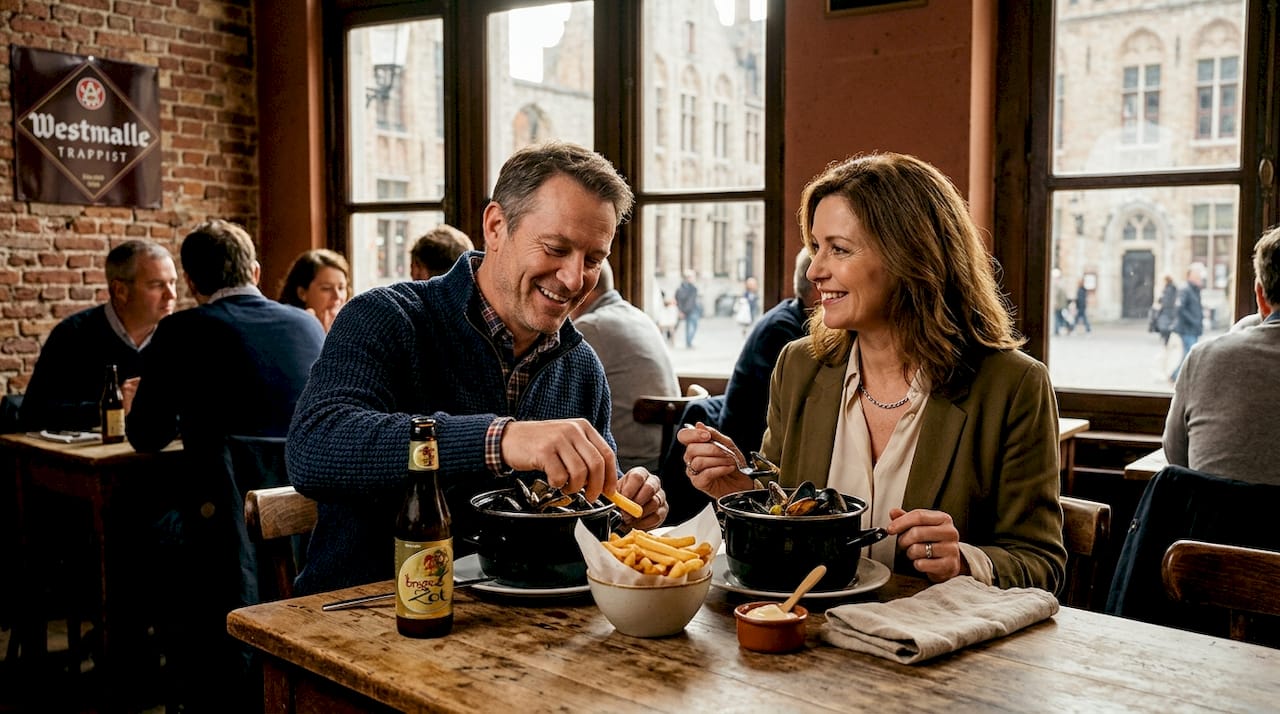
Mosselen-frites. This is arguably the most iconic plate in all of Brugge. Mosselen-frites features North Sea mussels steamed in white wine with shallots, served alongside a generous portion of double-fried fries. The broth that forms during steaming is deeply savory and perfect for dipping. Order it with a cold Belgian witbier and you have a genuinely perfect meal.
-
Stoofvlees (Carbonnade flamande). Stoofvlees is a Flemish beef stew slow-cooked in dark Belgian beer until the meat is fall-apart tender. The sauce thickens with time and develops a bittersweet, caramel depth that no other stew quite replicates. It is almost always served with frites and sometimes a slice of mustard-coated bread laid on top of the stew itself.
-
Garnaalkroketten. These might be the most overlooked gem on any Brugge menu. Garnaalkroketten are deep-fried croquettes filled with North Sea grey shrimp and creamy béchamel. The contrast between the shatteringly crisp shell and the warm, velvety interior is extraordinary. They are a Brugge specialty that rewards anyone willing to order something beyond the obvious.
-
Waterzooi. Originally from Ghent but fully embraced by Brugge’s kitchens, Waterzooi is a creamy stew made with chicken or fish, fresh vegetables, egg yolks, and cream. The version you’ll find in Brugge often incorporates North Sea fish rather than freshwater species, giving it a distinct coastal character. It’s warming, elegant, and deeply satisfying.
-
Witloof met ham en kaassaus. A true Belgian comfort classic. Witloof wraps endives in ham and bakes the whole dish under a blanket of cheese sauce until golden and bubbling. The slightly bitter endive balances the richness of the ham and sauce beautifully. It is best enjoyed on a cold winter evening.
-
Belgian frites. These deserve their own entry because they are genuinely different from anything else called a “fry.” Belgian frites are double-fried in beef tallow, giving them a crispy exterior and fluffy interior that is impossible to replicate with vegetable oil. They are served with mayonnaise or sauces like Andalouse, a Belgian classic made with mayo, tomato paste, and peppers.
-
Liège waffles. Not to be confused with the lighter Brussels waffle, Liège waffles contain pearl sugar that caramelizes during cooking, creating pockets of sticky sweetness throughout the dense, brioche-like dough. They are a street food staple and widely available across Brugge.
Bonus: Speculoos. Speculoos are spiced shortbread cookies loaded with cinnamon, ginger, and nutmeg, sold in every bakery and often paired with coffee. They make an excellent edible souvenir.
“The best meals in Brugge aren’t necessarily the most expensive ones. They’re the ones made with the right ingredients, at the right time of year, by people who care about the tradition behind each recipe.”
Pro Tip: Pair Wild foodz recommendations with your traditional food tour. Fresh bowls and superfoods offer a lighter counterbalance after a day of rich Flemish stews and fried specialties.
How Brugge dishes compare: Flavor, tradition, and where to try them
Now that we’ve covered these standout items, let’s see how they stack up against each other for flavor, originality, and foodie value. This comparison helps you prioritize based on your own tastes and schedule.
| Dish | Key ingredients | Flavor profile | Tradition level | Best spot to try |
|---|---|---|---|---|
| Mosselen-frites | Mussels, white wine, frites | Savory, briny, crispy | Very high | Canal-side restaurants |
| Stoofvlees | Beef, dark beer, onions | Rich, bittersweet, deep | Very high | Traditional brasseries |
| Garnaalkroketten | Grey shrimp, béchamel | Creamy, savory, crispy | High | Sit-down restaurants |
| Waterzooi | Chicken or fish, cream | Delicate, warming | High | Fine dining and bistros |
| Witloof met ham | Endive, ham, cheese sauce | Bitter, rich, comforting | High | Home-style restaurants |
| Belgian frites | Potatoes, beef tallow | Crispy, savory, rich | Iconic | Friteries everywhere |
| Liège waffles | Pearl sugar, brioche dough | Sweet, caramelized | Very high | Street stalls |
| Speculoos | Spiced shortbread | Warm, spiced, sweet | Classic | Bakeries and cafes |
Street food in Brugge centers on Markt square, Dijver canal, and the ‘t Zand Saturday market, where frites shatter on bite and fresh herring is sliced sashimi-style at open-air stalls. The market experience is faster and more casual but often just as flavorful as a sit-down meal.

For those seeking example of modern takes on Belgian classics, fresh bowls and vibrant wraps made with superfoods and locally inspired ingredients offer something genuinely different without abandoning quality.
A few notes on where to eat:
- Friteries (frietkot) are dedicated fry stands, and visiting one is non-negotiable. The best ones have queues of locals.
- Saturday market at ‘t Zand runs weekly and features local produce, cheese, and ready-to-eat street food at its most authentic.
- Brasseries near the Markt balance accessibility with solid Flemish cooking. Avoid spots with picture-only menus.
- Fine dining rooms near the Burg square offer Michelin-level interpretations that use the same ingredients elevated through technique.
Seasonal specialties and insider tips
To make your food journey even richer, take note of the seasonal rhythms and local secrets that define what’s on Brugge’s menu at any given time.
The city’s calendar is genuinely shaped by what’s available. Mussels peak in winter months while white asparagus takes center stage each spring, turning up in soups, with hollandaise, and alongside cured meats. If you visit during asparagus season (roughly April through June), ordering it is practically mandatory.
Seasonal guide for food lovers:
- October to March: Mussels are at their prime. This is the window when mosselen-frites is at its absolute best.
- April to June: White asparagus season. Look for it on chalkboard specials at traditional restaurants.
- Year-round: Frites, stoofvlees, garnaalkroketten, and waffles are available in every season, though quality varies by vendor.
- December: Warm speculoos flavors appear in hot drinks, desserts, and seasonal baked goods throughout the city.
Insider tips for eating well in Brugge:
- Visit the food events and seasonal fare listings before your trip to catch special menus tied to local harvests.
- Herring at the Saturday market is easy to miss but absolutely worth seeking out. It is cured, sliced thin, and served with pickled vegetables.
- Street waffles from a portable cart always outperform the same item served in a sit-down tourist cafe.
- Ask locals about their preferred frietkot. Every Brugge resident has strong opinions and will share them enthusiastically.
Pro Tip: Brugge’s Michelin-starred restaurants sometimes offer lunch menus at significantly lower prices than dinner. This is the best value way to experience elevated Flemish cooking without the full evening commitment.
One more thing worth knowing: Brugge has more Michelin-recognized restaurants per square kilometer than many other Belgian cities. This means culinary-level dining is genuinely accessible, not just a luxury reserved for special occasions. Even a quick weekday lunch can turn into a remarkable culinary moment if you know where to look.
Why Brugge’s food scene is more layered than tourists realize
Most visitors to Brugge arrive expecting chocolate, waffles, and beer. They leave having discovered something much more complex. The city’s food identity isn’t built around any single dish. It’s built around a relationship between place, season, and tradition that few cities in Europe still maintain this clearly.
The common tourist mistake is treating street food and fine dining as opposites, as if you have to pick a lane. In reality, both styles draw from the exact same pantry of ingredients. A friterie cook and a Michelin-starred chef might both start their week buying the same North Sea shrimp at the same market. What separates them is technique and context, not authenticity.
Waterzooi is a perfect example of how this layered identity works. Ghent claims the dish’s origin, but Brugge has adapted it with North Sea fish and coastal influences, making the Brugge version genuinely distinct. Neither is more authentic. Both are real expressions of their local environment.
The city also quietly rewards repeat visitors. A first trip to Brugge often sticks to the obvious dishes. A second trip opens up garnaalkroketten, fresh herring, white asparagus plates, and seasonal menus that feel genuinely surprising. The food scene at modern local cuisine level has evolved to include globally influenced fresh bowls and vibrant plates alongside traditional offerings, giving even seasoned Brugge visitors something new to discover.
The real insight is this: Brugge’s food scene isn’t frozen in the past. It is deeply rooted, yes, but it’s also alive and responsive to what seasonal ingredients make possible. That combination of stability and freshness is what makes it one of the most satisfying food destinations in all of Belgium.
Experience Brugge’s flavors for yourself
Ready to set your palate loose in Brugge? Start with a visit to Wild foodz by Hotel Entree, where the food speaks the same language of freshness and quality that defines the best of what Brugge has to offer.

At Wild foodz, every bowl, wrap, and salad is prepared fresh daily using vibrant, colorful ingredients that include superfoods, acai, and an extensive range of vegan options. The visual presentation alone is worth the trip, and if you’re visiting in February 2026, the Red Velvet Heart Waffles are a limited seasonal treat perfectly timed for Valentine’s Day. Whether you want to plan your Brugge dining around classic Flemish flavors or you need a lighter, nutrient-packed meal between your culinary adventures, Wild foodz delivers. Order for takeaway, or have it delivered via Deliveroo, UberEats, Takeaway.com, or direct self-delivery within a 20-mile radius.
Frequently asked questions
What local dish is Brugge most famous for?
Mosselen-frites is widely considered Brugge’s most iconic dish, featuring North Sea mussels steamed in white wine with shallots alongside double-fried fries. It is the dish most closely associated with the city’s culinary identity.
When is the best time to eat mussels in Brugge?
Mussels peak in winter when they are freshest and most abundantly available from the North Sea. Visiting between October and March gives you the best possible version of this classic dish.
Are Belgian frites different from French fries?
Yes, significantly so. Belgian frites are double-fried in beef tallow for a crispier exterior and richer flavor that vegetable oil simply cannot replicate, and they are typically served with mayonnaise rather than ketchup.
Where can I find authentic street food in Brugge?
Markt square, Dijver canal, and the ‘t Zand Saturday market are the top locations for traditional and innovative street foods that locals actually eat on a regular basis.
What’s a lesser-known must-try dish?
Garnaalkroketten, filled with North Sea shrimp and béchamel sauce, are a Brugge specialty that most visitors walk right past. They are crispy, creamy, and genuinely one of the most rewarding dishes on any traditional menu.
Leave a Reply