

TL;DR:
- Sustainable food service involves making business decisions that reduce environmental impact, ensure profitability, and promote social responsibility through sourcing, waste management, and energy use. It emphasizes evaluating suppliers ethically, preventing waste proactively, and implementing structured certification programs for consistent progress. Practical day-to-day practices, staff training, and measurable goals are essential for genuine, lasting sustainability in food operations.
Sustainable food service is one of those phrases that gets thrown around without much precision. Most people assume it means buying local or going organic. It actually means something far more operational than that. What is sustainable food service, really? It is a full set of business decisions that span how you source ingredients, how you manage waste, how you use energy, and how you treat the people in your supply chain. This guide breaks down every dimension of that definition and gives chefs, restaurant owners, and conscious diners a clear picture of what genuine sustainability looks like in practice.
Table of Contents
- Key takeaways
- What is sustainable food service, defined fully
- Sustainable sourcing goes deeper than “local”
- Food waste reduction: the highest-impact decision in your kitchen
- Sustainability programs and certifications worth knowing
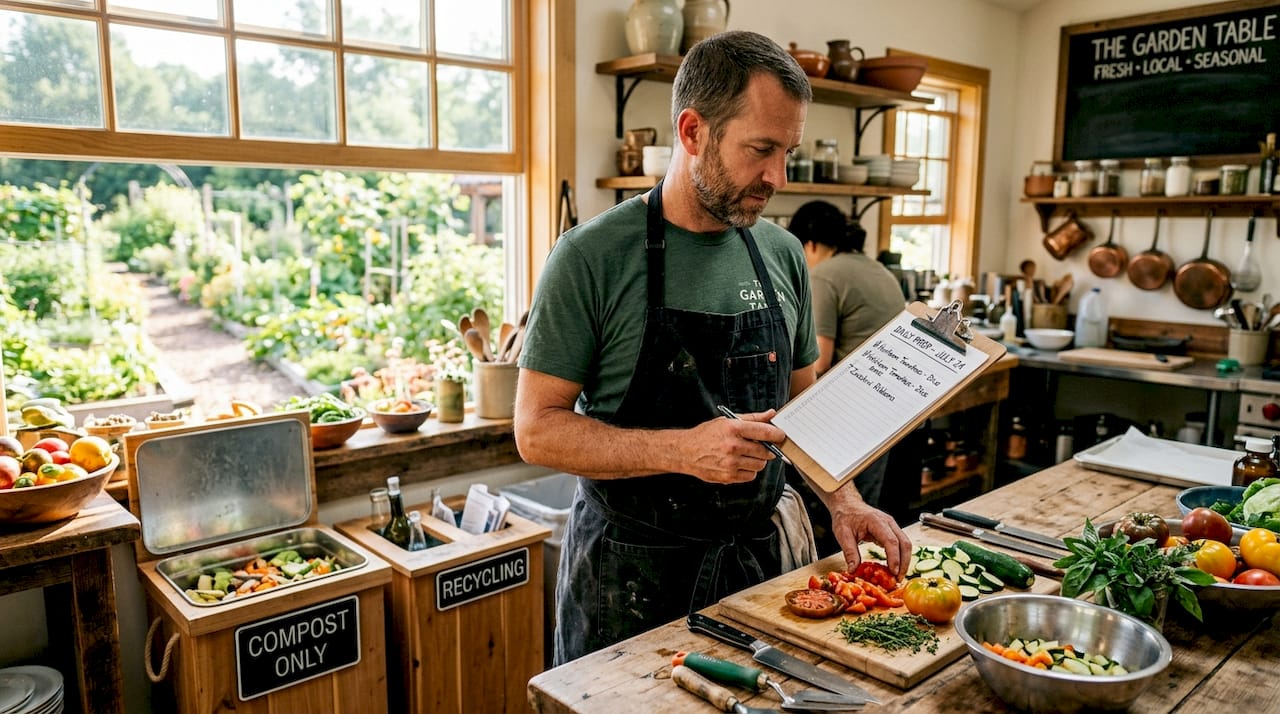
- What sustainable practices look like day-to-day
- My take on what sustainable food service actually requires
- Try sustainable dining at Wildfoodzbyhotelentree
- FAQ
Key takeaways
| Point | Details |
|---|---|
| Beyond local sourcing | Sustainable food service covers procurement, energy, waste, and social responsibility together. |
| Food waste is the top priority | Preventing waste before it happens is the single highest-impact move any kitchen can make. |
| Certifications create clarity | Structured programs give operations measurable criteria and auditability instead of vague goals. |
| Daily practices drive results | Staff protocols and consistent process decisions matter more than a single menu change. |
| Profitability and sustainability align | Smart sourcing, reduced waste, and efficient resource use lower costs while improving environmental outcomes. |
What is sustainable food service, defined fully
Most definitions stop at “eco-friendly.” That framing misses two thirds of the picture. Sustainable food service is an approach that aims to reduce environmental impact while staying profitable and operationally efficient, through every decision touching sourcing, waste reduction, and resource use.
Think of it as a triple bottom line applied to kitchens and dining programs:
- Environmental: Reducing food waste, lowering energy consumption, cutting single-use plastics, and minimizing transportation emissions across your supply chain.
- Economic: Making choices that protect long-term profitability, not just short-term cost savings. Sustainable sourcing partnerships and waste reduction both contribute directly to margins.
- Social: Considering the people involved. Ethical labor practices, fair wages for farmers and kitchen staff, and equitable access to healthy food all fall under this dimension.
None of those three can stand alone. A restaurant that sources organic produce from a supplier with documented labor violations is not running a sustainable operation, regardless of how its marketing reads. True eco-friendly food service means holding all three dimensions accountable at once.
One concrete framing that helps: think of every purchase, prep decision, and disposal choice as a vote for a system you either want to maintain or change. That shift in mindset is where sustainable restaurant management actually begins.
Sustainable sourcing goes deeper than “local”
Here is the misconception that causes the most damage in this space. Buying local is one tool. It is not the definition of sustainable food sourcing. A product transported 20 miles from a farm that uses exploitative labor and excessive chemical inputs is not a sustainable choice, even on a local level. Conversely, a globally sourced ingredient from a certified fair-trade operation with transparent supply chains can be the more ethical pick.
Sustainable sourcing means evaluating suppliers across four real dimensions: environmental impact of production, ethical labor conditions, long-term resource availability, and supply-chain transparency. Here is how to put that into practice:
- Ask every new supplier where and how the product is grown or raised, not just where it ships from.
- Request documentation on pesticide or antibiotic use, water sourcing, and soil practices.
- Verify labor conditions through third-party certifications like Fair Trade or Rainforest Alliance where relevant.
- Assess transportation honestly. Air freight has a dramatically higher carbon footprint than sea or rail, regardless of origin.
- Build supplier relationships over time. Long-term partnerships give you leverage to ask for transparency and make joint improvements.
Balancing cost and sustainability in sourcing is real work. Smaller operators in particular face budget pressure that can make certified or traceable ingredients feel out of reach. The practical answer is not to overhaul your entire supplier list overnight. Start with your highest-volume ingredients, since that is where your impact is largest. Even shifting one or two major ingredients toward verified ethical sourcing creates measurable change.
Pro Tip: Ask suppliers for their sustainability documentation before you need it. Operators who build this habit early find it far easier to comply with emerging regulations and certifications down the road.

Food waste reduction: the highest-impact decision in your kitchen
The EPA frames waste prevention as the single best environmental option available to food businesses. This is not a soft claim. The average American family of four wastes nearly $3,000 worth of food annually, and commercial kitchens produce waste at a far greater scale. The financial and environmental costs compound fast.

The mistake most operations make is focusing their waste efforts on the back end, meaning composting bins and recycling stations, while ignoring the front end where waste is actually created. Procurement, forecasting, and portioning are where the highest-leverage decisions live. When you buy less than you need and portion precisely to demand, you create less waste before it ever needs to be managed.
| Waste Reduction Strategy | Environmental Benefit | Operational Benefit |
|---|---|---|
| Demand-matched procurement | Fewer resources wasted in supply chain | Lower food spend per cover |
| Sales forecasting before ordering | Reduces over-production | Prevents spoilage losses |
| Standardized portioning | Consistent plate waste reduction | Improves food cost percentage |
| Composting and sorting stations | Diverts organics from landfill | Generates compostable material for local farms |
| Inventory rotation (FIFO) | Reduces product expiration waste | Protects ingredient quality |
Composting and sorting stations do matter. They should simply be understood as the last line of defense, not the primary strategy. Pair them with upstream prevention and you have a genuinely functional waste management system.
Pro Tip: Track your waste by category for two weeks before making changes. Most kitchens discover that 60 to 80 percent of their waste comes from two or three ingredients. Fix those first.
Sustainability programs and certifications worth knowing
Structured programs give operations a framework to measure, document, and communicate their sustainability efforts. Without standards, “sustainable” becomes whatever any operator decides it means that week.
Sustainable Gastronomy certification is one example built specifically for food service establishments. It targets restaurants, cafes, food trucks, and catering operations and integrates environmental, social, and economic sustainability into a single framework. The certification covers sourcing criteria, waste management, energy efficiency, and social responsibility in one auditable package.
What makes certification-style programs valuable is not the badge. It is the clarity. When you have documented criteria for supplier selection and waste thresholds, you remove ambiguity for staff and suppliers alike. Everyone in the operation knows what the standard is. That consistency is what produces results over time, not a one-time menu redesign.
Hospitality businesses exploring sustainability can also look at how textile and supply sourcing standards in adjacent sectors have built auditability models worth adapting. The parallel is more direct than it sounds: any supply-facing sustainability program benefits from the same documentation logic.
For operators not ready to pursue formal certification, building an internal standards document using certification criteria as a template is a practical starting point. You get the operational structure without the certification fees, and you build toward formal recognition when the time is right.
What sustainable practices look like day-to-day
Theory is only useful when it translates into what actually happens before service. Here is what green food service solutions look like in practice across real operations:
- A school food service program at OPRF uses daily sustainability practices including composting, compostable serving ware, plant-based menu options, and vendor partnerships with local farms. The result is both reduced waste and stronger community economic ties.
- Restaurant kitchens committed to sustainable dining practices shift to reusable prep containers, eliminate single-use plastic wrap during prep, and build menu items specifically to use trim and off-cuts that would otherwise be discarded.
- Cafeteria programs redesign serving lines so that high-waste items are portioned by staff rather than self-served, which reduces over-portioning and plate waste by measurable percentages.
- Catering operations focused on what is ethical catering go beyond menu choices to address packaging, transportation logistics, and supplier vetting as part of every event proposal.
Staff protocols and consistent behavior drive these outcomes, not individual menu decisions. The kitchen team that correctly rotates inventory, portions to spec, and uses every part of an ingredient delivers more sustainability value than one expensive organic certification on a single product.
The challenges here are real. Staff turnover in food service is high. New team members need onboarding that includes sustainability practices explicitly, not as an afterthought. Building those behaviors into training from day one is how you protect the gains you make.
My take on what sustainable food service actually requires
I have watched a lot of operations announce sustainability initiatives with genuine enthusiasm and then quietly let them fade because the commitment was attached to a marketing moment rather than an operational decision. The truth I have learned: sustainability as end-to-end operations is the only version that actually works. When it lives in procurement, kitchen process, and waste management at the same time, it becomes self-reinforcing. When it lives only in your social media captions, it costs you credibility.
The most overlooked piece is labor. Food service sustainability conversations spend enormous time on sourcing and waste, which deserve the attention. But the labor conditions of the people preparing your food, and the people growing it, get far less scrutiny than the carbon footprint of your packaging. What is ethical catering, really, if it excludes the people doing the work?
My honest advice for operators starting this process: pick one measurable change, implement it with documented protocols, and prove it works before adding the next one. Trying to overhaul sourcing, waste, energy, and packaging simultaneously usually collapses under its own weight. Small, consistent wins compound into genuine transformation. That is the long game worth playing.
— Mawghan
Try sustainable dining at Wildfoodzbyhotelentree
If you want to experience what thoughtful, sustainable dining actually tastes like, Wildfoodzbyhotelentree is a strong place to start. Right now through February 2026, the kitchen is featuring Red Velvet Heart Waffles for Valentine’s Day. These are the kind of menu items that prove sustainable food service does not mean bland or boring. Vibrant, visually striking, and prepared with the same daily commitment to fresh ingredients that runs through every bowl, salad, and wrap on the menu.

Wildfoodzbyhotelentree’s extensive vegan options, superfoods, and seed-forward ingredients reflect exactly the kind of ingredient-conscious sourcing this article describes. Whether you order via Deliveroo, UberEats, or direct delivery within 20 miles, you get food that is worth both your appetite and your values. Explore the full menu and see what sustainable, colorful eating looks like in practice.
FAQ
What is sustainable food service in simple terms?
Sustainable food service is a set of business decisions covering sourcing, waste reduction, energy use, and social responsibility that together reduce environmental impact while keeping operations profitable.
How is sustainable sourcing different from buying local?
Local sourcing is one factor, but sustainable sourcing also includes ethical labor practices, supply-chain transparency, and long-term resource availability regardless of geographic proximity.
What is the single most impactful sustainability practice in food service?
The EPA identifies food waste prevention through procurement, forecasting, and portioning as the highest-impact option, ahead of composting or packaging changes.
What is ethical catering?
Ethical catering applies sustainability criteria to every element of an event, including supplier vetting, labor conditions, waste management, and packaging choices, not just the menu.
Do sustainability certifications really make a difference?
Yes. Structured certification programs create documented, auditable standards that reduce ambiguity for staff and suppliers and support consistent long-term results.
Leave a Reply