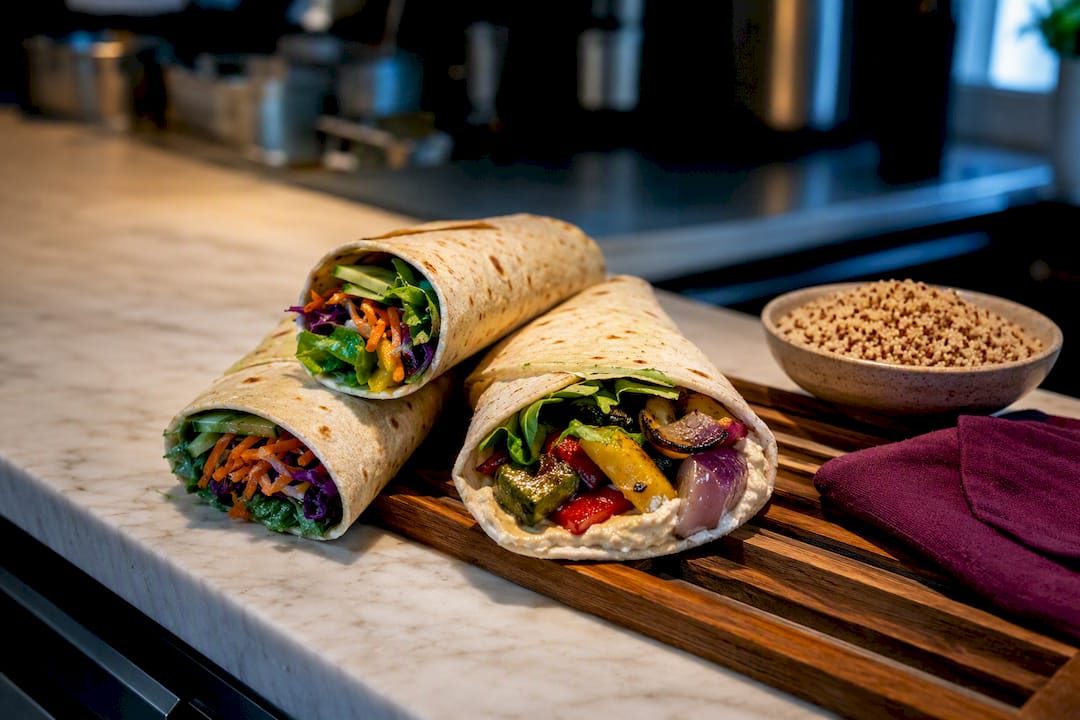


If you need lunch in five minutes, buy a ready-made gluten-free wrap and warm it in a skillet. If you want the best texture and control over ingredients, make your own with a quinoa or rice-corn base. Either way, a quick reheat fixes most stiffness, and the recipes and handling tips below cover both routes in detail.
TL;DR:
- Store-bought gluten-free wraps are ideal for quick meals, especially when less than 10 minutes of prep time is available.
- Homemade wraps excel in texture, flavor control, and accommodating multiple dietary restrictions, but require at least 15 minutes or more.
- Proper cooling and careful filling prevent cracking of homemade gluten-free wraps, with reheating methods like skillet or microwave helping maintain softness.
- Grain-based store-bought options like rice and corn tortillas are the most neutral and pliable, with labels verified for gluten-free certification and minimal additives.
- Ordering fresh, prepared gluten-free wraps ensures consistent texture and no cleanup, making it a reliable option over homemade in busy or restrictive diets.
Table of Contents
- Wrap Sans Gluten: Buy or Make? A Quick Decision Checklist
- Three Easy Gluten-Free Wrap Recipes That Actually Roll
- How to Keep Gluten-Free Wraps Soft for Takeaway
- Reading Labels: How to Pick a Good Store-Bought Wrap Sans Gluten
- Why These Methods Reflect How Wild Foodz Handles Wraps Every Day
- Order a Fresh Gluten-Free Wrap Without the Kitchen Cleanup
- Sources
Wrap Sans Gluten: Buy or Make? A Quick Decision Checklist
Choosing between a store-bought wrap sans gluten and a homemade one comes down to three things: how much time you have, how picky you are about texture, and whether you’re managing allergies beyond gluten.
Buying makes sense when you need something right now, when you’re traveling without a blender or stovetop, or when you just want consistent results without trial and error.
Making your own wins when flavor neutrality matters, when you want fewer additives and gums on the ingredient label, or when you’re cooking for someone with multiple restrictions (dairy-free and egg-free, for instance) that store shelves don’t always cover well. Homemade also wins if you’ve tried three brands and none of them roll without splitting.
Run through this before you decide:
- Time check: Fewer than 10 minutes available? Buy. More than 20? Make.
- Texture priority: Need it soft enough to roll tightly around a full filling? Quinoa or rice-corn dough beats most packaged options.
- Dietary control: Multiple allergies stacked on top of gluten-free? Homemade lets you swap ingredients freely.
- Equipment: No blender or nonstick pan on hand? Buy.
Neither choice is wrong. Plenty of people do both in the same week, buying for weekday lunches and making a batch for weekend meal prep.
Three Easy Gluten-Free Wrap Recipes That Actually Roll
Cracking is the number one complaint with homemade gluten-free flatbreads, and it almost always comes down to two things: dough that’s too thick, or wraps that get folded before they’re fully cooled and rested. These three recipes sidestep both problems.
1. Quinoa wrap (best all-around pliability)
Soak ½ cup of raw quinoa in water for at least four hours, ideally overnight. Drain and rinse it thoroughly under running water until the water runs clear. This step matters more than people think: quinoa carries a natural coating called saponin, and soaking and rinsing removes the bitterness that would otherwise ruin the flavor.
Blend the rinsed quinoa with ½ cup water, a pinch of salt, and a teaspoon of oil until completely smooth. A weak blender leaves grit, so a powerful blender and careful rinsing are the two technical details that separate a smooth wrap from a gritty one. Pour a thin layer into a lightly oiled nonstick pan over medium heat, swirl to spread it thin, and cook about two minutes per side.

Yield: 4 to 6 wraps. Total time: 15 minutes active, plus soaking. If wraps tear when rolled, your batter was likely too thick. Add a tablespoon of water and blend again.
2. Maizena-style rice-corn wrap (fastest quick fix)
Whisk together cornstarch (Maizena) and rice flour in equal parts, about ½ cup each, with 1 cup of water and a pinch of salt until the batter runs thin, almost like heavy cream. This cornstarch and corn flour mix produces thin, flexible wraps well suited to rollups when you keep the layer thin and the pan properly heated. Pour a small ladle into a hot, lightly greased pan, tilt to spread it edge to edge, and cook 60 to 90 seconds per side until the edges lift on their own.
Yield: 6 to 8 wraps. Total time: 10 minutes. If the wrap sticks or tears at the fold, the pan wasn’t hot enough before you poured.
3. Chickpea or egg savory wrap (heartiest, fastest cook)
Whisk chickpea flour with water in a 1:1 ratio, add a pinch of salt and cumin, and let it rest 10 minutes to hydrate. Cook exactly like the rice-corn version. For an egg-based version, whisk two eggs with a tablespoon of rice flour and a splash of water, then cook the same way. Rice-and-corn tortillas cook fast at home. Home versions typically list cook times of one to two minutes per side, and the chickpea batter follows the same rhythm.
Yield: 4 wraps. Total time: 15 minutes including rest. This version holds up best under heavy, wet fillings like grilled vegetables or hummus.
Pro Tip: Let every homemade wrap cool flat on a rack for two minutes before stacking or rolling. Rolling straight off the pan is the single most common cause of cracking, even with a perfect batter.
How to Keep Gluten-Free Wraps Soft for Takeaway
Cracking happens for one of two reasons: the wrap has cooled and stiffened, or it’s been overfilled past the point where any dough can bend without splitting. Fix the first with heat, and the second with restraint.
Three heating methods work reliably:
- Skillet: 30 seconds per side over medium heat, no oil needed if the pan is nonstick.
- Microwave: Wrap the tortilla between two damp paper towels and heat for 20 to 40 seconds. Warming between damp towels or with a quick pan reheat is the standard fix recommended by wrap manufacturers themselves.
- Low oven: 300°F for 3 to 4 minutes, stacked and wrapped in foil, works well when you’re heating several at once.
Once warm, don’t overload the filling. A wrap can hold roughly one cup of filling before the seams give out. Anything more and even a perfectly heated wrap will split at the fold.
For packing ahead, roll the wrap, wrap it tightly in plastic film, and chill it for 20 to 30 minutes. This is standard practice in professional kitchens preparing food for transport. Chilling briefly after rolling helps the shape set and keeps the wrap from unrolling in a lunchbox or delivery bag. Spread a thin barrier of hummus, cream cheese, or avocado directly on the wrap before adding wetter ingredients like tomatoes or sauces to stop the center from turning soggy.

If a wrap tears anyway, don’t toss it. Reheat it for 15 seconds, patch the tear with a thin smear of filling to act as glue, and slice the whole thing into pinwheels instead of serving it as a single roll.
Reading Labels: How to Pick a Good Store-Bought Wrap Sans Gluten
Not every gluten-free tortilla on the shelf behaves the same way once you get it home. The base ingredient decides almost everything: flavor, flexibility, and how well it survives a second reheat.
Rice, corn, and tapioca-starch blends tend to be the safest bet for general use, since they carry a mild flavor that won’t clash with sweet or savory fillings. Reviewers consistently point to rice, corn, and starch-blend tortillas as the most neutral and pliable options on the market, while chickpea and legume-based wraps bring more character and a heartier bite. Legume-based wraps make sense for a Mediterranean-style filling; grain-based ones work better as a blank canvas for anything sweet, spicy, or delicate.
Before buying, run through this:
- Certification: Look for a “gluten-free” label backed by certification, not just an absence of wheat on the ingredient list.
- Additives: A short ingredient list with recognizable starches beats one loaded with five different gums and stabilizers.
- Fiber content: Wraps with higher fiber content tend to hold together better and feel less flimsy.
- Storage directions: Check whether the package requires refrigeration after opening, since some gluten-free doughs spoil faster than wheat-based ones.
A quick scan of these four points at the store saves you from buying a wrap that tastes fine but falls apart the second you try to roll it.
Why These Methods Reflect How Wild Foodz Handles Wraps Every Day
Every reheating and packing tip above mirrors what Wildfoodzbyhotelentree does behind the scenes preparing wraps for takeaway and delivery: warm gently, fill without excess, wrap tightly, and let the shape set before it travels. Home cooks fighting a cracked tortilla are usually running into the same texture problem a delivery kitchen solves daily. If you want to see the difference fresh preparation makes, ordering a wrap for comparison is a fair test against your own kitchen results.
— Mawghan
Order a Fresh Gluten-Free Wrap Without the Kitchen Cleanup
Skip the blender and the trial-and-error batches. Fresh, colorful wraps, bowls, and vegan options are prepared daily, so you can enjoy wraps sans gluten that are portioned, filled, and packed to travel without splitting. They are ready for takeaway or delivery through common platforms.

Currently, Red Velvet Heart Waffles are being served as a seasonal option worth adding to any order alongside your usual wrap or bowl. Ordering prepared food means consistent texture every single time, no reheating guesswork, and no dishes afterward. If you’re deciding between a fresh, colorful meal and another round of homemade tortillas, check today’s menu and place an order for takeaway or delivery, and try the Red Velvet Heart Waffles while they’re still on the seasonal lineup.
Sources
- Wraps sans gluten au quinoa (tortillas maison faciles) – Cuisine Saine
- Wraps et accompagnements sans gluten | Maizena
- The Best Gluten Free Tortillas You Can Buy—Including Soft, Sweet, and Spinach Wraps
- Recette Fajitas Sans Gluten À La Farine De Riz Et De Maïs
Leave a Reply