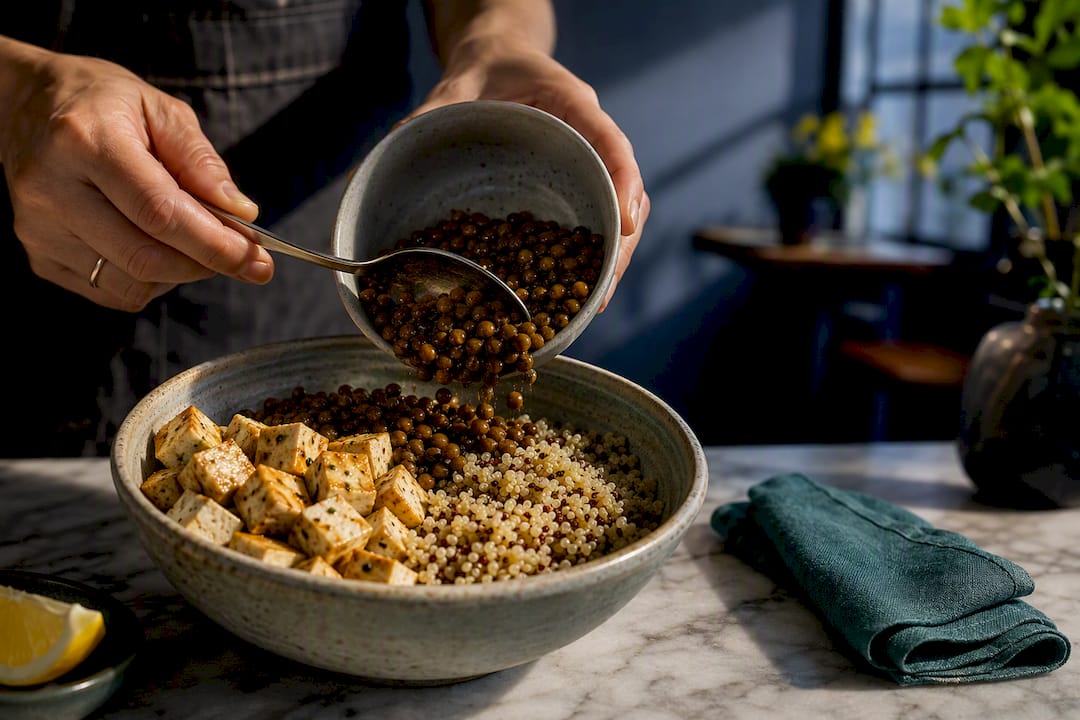


The most reliable protéines végétales bowl follows one formula: one legume, one whole grain, a soy-based protein like tofu or edamame, a spoonful of seeds, and a generous pile of vegetables. Layer those five elements together and you land on a complete amino acid profile, real fiber, and enough staying power to skip the 3 PM snack. If you’re packing or ordering one for later, keep the sauce separate until you eat.
TL;DR:
- Combining legumes and grains, such as lentils with quinoa or farro, provides a complete amino acid profile and at least 25 grams of protein per bowl.
- Using a variety of colorful vegetables and adding seeds or nuts enhances nutrient density, flavor, and visual appeal, encouraging healthier eating.
- Preparing and storing bowls with separate sauces and layered ingredients prevents sogginess and maintains freshness for up to four days.
- Quick plant-based bowls can be assembled in 10 to 15 minutes with canned proteins and pre-cooked grains, ideal for busy weeknights.
- For soy-free options, focus on lentils, chickpeas, and seed toppings like pumpkin or sunflower seeds to meet protein needs effectively.
Table of Contents
- Why This Combination Delivers Complete Plant Protein
- What Goes Into a Nutrient-Dense Protein Bowl
- How to Build a High-Protein Vegetable Bowl Step by Step
- Keeping a Protein Bowl Fresh for Meal Prep or Delivery
- Why Color on the Plate Changes How Much You Actually Eat
- Order a Protein-Forward Bowl Without the Prep Work
- Sources
- FAQ
Why This Combination Delivers Complete Plant Protein
Legumes and grains fix each other’s weaknesses. Lentils and chickpeas run low on methionine but load up on lysine; grains like quinoa and farro do the opposite. Pair them and you get a complete protein foods profile your body can actually use for muscle repair, not just calories.
The numbers back this up. Cooked lentils deliver roughly 9 grams of protein per 100 grams, tofu comes in around 12 to 15 grams per 100 grams, and quinoa stands on its own as a naturally complete protein source, according to Healthline’s breakdown of complete protein foods.
Protein density at a glance: a bowl built on roughly 100 g cooked lentils, 100 g tofu, and a half cup of cooked quinoa can clear 25 grams of protein before you even add seeds or nuts.

The benefits don’t stop at protein. Legumes and tofu also bring fiber, iron, and potassium to the table, which support both digestion and post-workout recovery, according to the Cleveland Clinic’s rundown of plant-based protein sources. That’s why a well-built vegan protein bowl tends to keep you satisfied longer than a plate of plain rice and vegetables ever will.
What Goes Into a Nutrient-Dense Protein Bowl
Building a nutrient-dense grain bowl comes down to five layers, and once you know the ratios, you can mix and match based on whatever’s in your fridge.
- Whole grain base (½ to ¾ cup cooked): quinoa, farro, or brown rice. Quinoa wins for convenience since it’s already a complete protein on its own.
- Primary protein (¾ to 1 cup): lentils, chickpeas, cubed tofu, sliced tempeh, or shelled edamame. Combining two, like tofu and edamame, boosts both protein and texture contrast.
- Vegetables (1 to 2 cups): roasted sweet potato, shredded carrot, cucumber, or leafy greens for volume without much added weight in calories.
- Healthy fat (a quarter of an avocado or 1 tablespoon oil): helps you absorb fat-soluble vitamins from the vegetables.
- Seeds or nuts (1 to 2 tablespoons): pumpkin seeds, chia, or sliced almonds add crunch, plus extra omega-3s and minerals, a trick borrowed from colorful superfood-forward bowl recipes built around roasted seasonal vegetables and seed toppings.
If you’re cooking for someone with a nut allergy, swap almonds and cashews for a sunflower or pumpkin seed mix. Gluten sensitivity? Quinoa and rice are naturally gluten free, so skip farro. And if soy is off the table, double up on lentils and chickpeas instead of tofu or edamame.
Pro Tip: A miso-ginger-tahini dressing tastes better the next day. Whisk it up the night before and let it rest in the fridge so the flavors have time to meld before it hits your bowl.
For sauce, go beyond olive oil and vinegar. A lemon-tahini drizzle, a chimichurri, or a peanut-lime dressing does more heavy lifting for flavor than any single ingredient in the bowl itself, echoing the bright-sauce approach EatingWell recommends for its plant-based protein bowls.
How to Build a High-Protein Vegetable Bowl Step by Step
Two workflows cover most situations: one for a weeknight in a hurry, one for when you actually have time to roast something.
Quick bowl, 10 to 15 minutes:
- Warm precooked quinoa or rice in the microwave while you prep everything else.
- Sear cubed tofu in a hot pan with a splash of soy sauce until the edges crisp, about 5 minutes.
- Drain and rinse a can of lentils or chickpeas, no cooking needed.
- Toss in shredded carrot, cucumber, and a handful of edamame, slightly undercooked so it keeps its bright color and snap.
- Finish with seeds and a quick-whisked tahini dressing.
That’s a full plant protein recipe: quinoa, seared tofu, canned lentils, edamame, raw vegetables, seeds, and dressing, no advance prep required.
Roasted-veg and lentil bowl, 30 to 40 minutes: Roast cubed sweet potato and cauliflower at 425°F for 25 minutes while lentils simmer on the stove. One version of this build, a lentil, sweet potato, and tofu bowl from Mamie Végé, lands around 509 calories and 44 grams of protein per serving, a solid benchmark for a recovery-focused meal after a workout.

Pro Tip: Plate the warm grain and roasted vegetables first, then add the cold or raw elements like cucumber and herbs last. It keeps textures distinct and looks far more appetizing than one mushed-together pile.
Keeping a Protein Bowl Fresh for Meal Prep or Delivery
The biggest mistake people make with vegan meal prep ideas is dressing the bowl before storing it. Sauce sitting on greens or grains for six hours turns everything soggy.
- Pack sauce in a separate small container or lidded cup, always. A stable emulsion like tahini-lemon holds up better in transit than a thin vinaigrette that separates.
- Layer heavier, sturdier ingredients (grains, roasted veg) on the bottom and delicate or crunchy items (greens, seeds, sliced avocado) on top so nothing gets crushed.
- Glass containers with separate compartments beat single-bowl plastic for both freshness and how the food actually looks when you open it.
- Refrigerated prepped bowls hold up well for 3 to 4 days; reheat the grain and protein components before adding cold toppings back in.
- Ordering out? If a bowl includes an açaí or fruit base, ask for the unsweetened version so you control the sugar, not the kitchen.
Why Color on the Plate Changes How Much You Actually Eat
People eat with their eyes before their fork ever moves, and a beige bowl of plain grains and gray tofu does not trigger the same appetite response as one with deep purple cabbage, orange sweet potato, and bright green edamame scattered across it. That’s not just a plating preference. Visual variety signals nutrient variety, and it makes a healthy protein bowl feel like a treat instead of a chore.
This is the whole philosophy behind the approach of vibrant, superfood-forward bowls that use color intentionally, not as decoration but as a cue that the meal is genuinely nutrient-dense. Even a seasonal item like Red Velvet Heart Waffles offered throughout February 2026 for Valentine’s Day follows the same logic: a striking dish people want to photograph before they eat it usually gets finished, unlike the sad desk salad nobody enjoys.
— Mawghan
Order a Protein-Forward Bowl Without the Prep Work
Some nights the smartest move isn’t cooking at all. If you’d rather skip the chopping and let someone else handle the tofu sear and the sauce timing, Fresh, colorful bowls, salads, wraps, and specialty vegan options are prepared daily, including superfood picks with seeds like açaí. Orders are available for takeaway or delivery through common platforms, with some local self-delivery options.

Seasonal Red Velvet Heart Waffles are offered throughout February for Valentine’s Day, a visual, shareable pick that fits alongside protein bowls on the regular menu. For more on how presentation shapes appetite, take a look at vibrant food presentations that go beyond the usual bowl. Ready to skip the dishes tonight? Place an order for delivery or takeaway and have a protein-forward bowl at your door before you’d even finish rinsing the quinoa yourself.
Sources
- Plant-based protein sources – Cleveland Clinic
- High-protein plant-based diet recipes to make first – EatingWell
FAQ
How much protein should a plant-based bowl have?
Aim for around 25 grams per serving, which a bowl combining tofu, lentils, and quinoa reaches easily without any protein powder or supplement.
What’s the best base for a vegan protein bowl?
Quinoa works best since it’s a naturally complete protein on its own, though farro and brown rice pair just as well when combined with a legume.
Can I make a high-protein bowl without soy?
Yes. Skip tofu and edamame and lean harder on lentils, chickpeas, and a generous scoop of pumpkin seeds or nuts to keep the protein count up.
How do I keep a delivered protein bowl from getting soggy?
Ask for sauce on the side whenever possible, and if you’re ordering from Wildfoodzbyhotelentree, request unsweetened bases and separate dressings so the vegetables and grains stay distinct until you’re ready to eat.
Is edamame a good protein source for bowls?
Yes. Edamame is a complete plant protein with a firm, bright texture when slightly undercooked, making it one of the better swaps for tofu in a quick bowl.
Leave a Reply