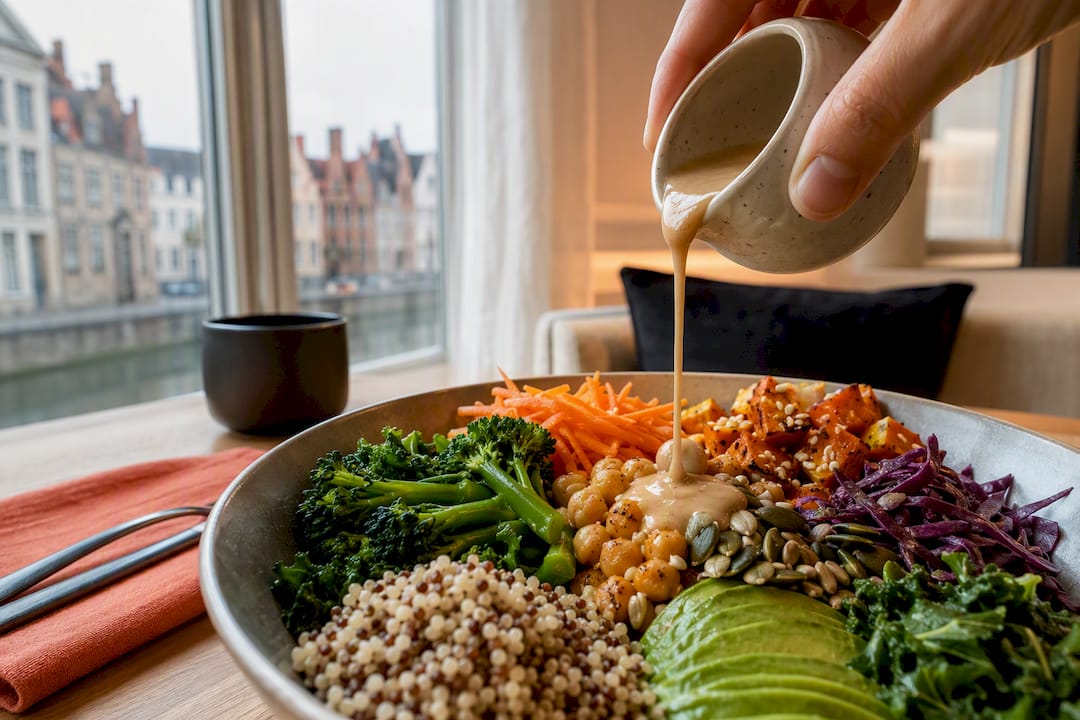


A balanced bowl is a single dish that covers protein, a fiber-rich carbohydrate, vegetables, and a healthy fat all-in-one container. The build rule is simple: anchor with a protein and a wholegrain first, then pile on vegetables and finish with a fat-based dressing. Get that ratio right, and you get a meal that keeps you full for hours, travels well in a container, and never gets boring because the combinations are endless.
TL;DR:
- Incorporate a fist-sized portion of whole grains or starchy vegetables as the bowl’s base to ensure sufficient fiber and satiety.
- Include a palm-sized serving of protein such as chicken, fish, tofu, or legumes to meet daily energy and nutrient needs.
- Add at least two to three different colored vegetables to surpass the recommended daily intake of 300 grams for better nutrition.
- Use healthy fats like olive oil, avocado, or tahini in moderation, and prefer homemade dressings over high-sodium, saturated-rich bottled sauces.
- Batch cook grains and proteins, store components separately, and select seasonal produce to keep bowls quick, affordable, and adaptable for various dietary goals.
Table of Contents
- What Makes a Bowl Balanced: Core Components and Why They Matter
- Quick Balanced-Bowl Templates and 6 Practical Recipes to Try
- Meal-Prep and Shopping Tips to Keep Bowls Quick, Affordable, and Varied
- Adapting Balanced Bowls for Special Diets and Health Goals
- Practical Kitchen Notes From Wild Foodz by Hotel Entree
- Why Bowls Work as a Daily Habit
- Order a Balanced Bowl from Wild Foodz by Hotel Entree
- Sources
- FAQ
What Makes a Bowl Balanced: Core Components and Why They Matter
Every solid bowl starts with four building blocks, and skipping one is usually why a “healthy” bowl leaves you hungry an hour later.
- Base: Whole grains like quinoa, farro, or brown rice, or a starchy vegetable like roasted sweet potato. Aim for about a fist-sized portion, roughly 150 to 200 g cooked.
- Protein: Chicken, salmon, tofu, tempeh, or legumes. The WHO recommends protein make up 10 to 15% of daily energy intake, which for most bowls translates to a palm-sized portion.
- Vegetables: At least two, ideally three, colors. Sciensano’s dietary guidelines call for at least 300 g of vegetables per day, and a bowl is one of the easiest ways to hit that without thinking about it.
- Healthy fat and dressing: Olive oil, avocado, tahini, or seeds, kept to one or two tablespoons so the bowl stays balanced rather than swimming.
Belgians eat about 16 grams of fiber a day. Health authorities recommend at least 25 grams, and that gap is exactly why bowls built around whole grains, legumes, and vegetables matter so much. Sciensano’s national food consumption survey puts that shortfall in plain numbers, and a single bowl loaded with lentils, farro, and roasted broccoli can supply a third of the day’s target on its own.
For dressings, the WHO also flags sodium and saturated fat as the two ingredients worth watching. A squeeze of lemon, a spoon of tahini, and a splash of olive oil beat a bottled sauce loaded with salt every time. A good mental shortcut: half the bowl vegetables, a quarter protein, a quarter grain, and fat drizzled on top.

Quick Balanced-Bowl Templates and 6 Practical Recipes to Try
You don’t need a recipe book. You need a formula and a rotating list of ingredients, which is exactly what the Balanced Meal Framework teaches: pick a protein, pick a fiber-rich carb, add produce, add fat. Here are six templates built on that logic, each ready in under 20 minutes of active work.
- Mediterranean chicken bowl: Grilled chicken, farro, cucumber, cherry tomatoes, olives, tzatziki. Prep time: 15 minutes.
- Salmon poke bowl: Cubed salmon, sushi rice, edamame, shredded carrot, avocado, sesame dressing. Prep time: 12 minutes if the rice is already cooked.
- 25g plant protein bowl: Chickpeas, black beans, quinoa, roasted peppers, spinach, lime tahini sauce. This one is measurable, roughly 25 grams of plant protein per serving, which makes it a solid vegan benchmark rather than a guess.
- Buddha bowl: Baked tofu, brown rice, steamed broccoli, shredded red cabbage, pumpkin seeds, peanut sauce.
- Tuna and white bean bowl: Canned tuna (or chickpeas as a swap), white beans, arugula, roasted zucchini, mustard vinaigrette.
- Breakfast açaí bowl: Frozen açaí puree, banana, granola, berries, a spoon of nut butter. Keep the base portion to 8 to 12 oz. so the sugar from fruit doesn’t run away from you.
Swaps keep these workable on a real week: no tuna in the fridge, use chickpeas; no farro, use barley or leftover rice. For dressings, four go-to sauces cover almost every bowl style: a lemon tahini, a peanut ginger, a yogurt herb, and a basic olive oil vinaigrette. Whisk any of them in a mason jar and they keep for days.
Meal-Prep and Shopping Tips to Keep Bowls Quick, Affordable, and Varied
Cook grains and proteins in batches on Sunday, then store components separately, not fully assembled, so vegetables stay crisp instead of soggy.
- Roast a full sheet pan of mixed vegetables (broccoli, peppers, sweet potato) while the grains simmer.
- Keep dressed bowls in the fridge for no more than three days; store dressing separately if you’re prepping past two days.
- Frozen vegetables and canned legumes cost less than fresh and lose almost nothing nutritionally.
- Buy produce in season for both price and flavor.
Pro Tip: Make dressings in small mason jars, shake instead of whisk, and you’ll have several days of sauce variety without touching a blender.
Adapting Balanced Bowls for Special Diets and Health Goals
Vegan eaters should lean on tofu, tempeh, and legumes. Sciensano notes Belgians eat legumes far less than recommended, averaging just 6 g a day against a target of several servings weekly, so a chickpea-heavy bowl closes a real gap.
- Gluten-free: Swap wheat-based grains for quinoa, rice, or buckwheat, and check sauces for hidden soy sauce or malt vinegar.
- Lower-sodium: Skip bottled dressings; read labels for sodium per serving and build your own instead.
- Higher protein or smaller portions: Adjust the protein and base ratio, not the vegetables, to hit calorie or satiety goals.
Practical Kitchen Notes From Wild Foodz by Hotel Entree
Some food services build bowls around the same logic: pre-batched sauces in jars for portion control, an 8 to 12 oz. rule for açaí bowls to keep sugar in check, and a measurable 25 g plant protein bowl for anyone who wants a number, not a guess. These are the same habits worth copying at home, whether you’re cooking or ordering.

Why Bowls Work as a Daily Habit
Bowls survive busy weeks because they don’t demand a plan, just a rule. Grab a protein, grab a grain, fill the rest with vegetables, and you’re done. That repeatability is why Some food services build menu options around the same structure, from savory bowls to seasonal specials, for people who want it ready-made instead of chopped at home.
— Mawghan
Order a Balanced Bowl from Wild Foodz by Hotel Entree
Some food services offer bowls, salads, and wraps prepared fresh daily, with vegan options built around superfoods like açaí, so the protein plus fiber plus vegetable formula is already done for you.

The 25g Plant Protein Bowl is a good example of that measurable approach in action, built for anyone who wants a number they can count on rather than a guess. Ordering makes the most sense when you’re short on time, traveling, hosting, or simply done cooking for the day, and it works for takeaway or delivery through Deliveroo, UberEats, Takeaway.com, or self-delivery within a 20-mile radius.
Some seasonal menus feature Red Velvet Heart Waffles as a Valentine’s Day option: a seasonal, visually appealing choice for anyone who wants something sweet alongside a savory bowl order. Place an order directly through the Wild Foodz by Hotel Entree landing page to see the full daily lineup and check what’s ready near you.
Sources
Sciensano supplies Belgian-specific fiber, vegetable, and legume intake data. The WHO sets the broader macronutrient and diet-quality framework. The Balanced Meal Framework translates both into a repeatable, four-part template for building any bowl.
This article is general information, not a substitute for advice from a qualified doctor. Consult a qualified healthcare professional about your own circumstances before acting on anything here.
- Sciensano — Fibres alimentaires (Belgian national consumption survey)
- WHO — Healthy diet fact sheet
- Balanced Meal Framework — Food & Nutrition
- Sciensano — Belgian dietary recommendations (Council report)
FAQ
Are Poke Bowls Good for a Diet?
Poke bowls can fit easily into a balanced eating pattern when they include a lean protein like fish or tofu, a modest rice portion, and plenty of vegetables. The issue is usually the sauce and add-ons, since heavy mayo-based dressings and large portions of fried toppings can push calories and sodium up fast.
What Are Some Healthy, Balanced Bowl Ideas?
A Mediterranean chicken bowl, a salmon poke bowl, a plant protein bowl with chickpeas and quinoa, and a Buddha bowl with tofu and roasted vegetables all cover the four core components: protein, fiber-rich carb, vegetables, and fat. Wild Foodz by Hotel Entree’s 25g Plant Protein Bowl is one measurable option worth trying.
Is Bowl Cake Healthy?
Bowl cake, a microwave mug cake often marketed as a quick treat, is generally not a balanced meal since it’s mostly refined carbohydrate and sugar with little protein or fiber. It works fine as an occasional dessert, but it doesn’t belong in the same category as a savory, nutrient-dense bowl.
What Can You Put in a Bowl?
Any combination that covers a protein (chicken, tofu, beans, fish), a fiber-rich base (quinoa, brown rice, farro), two or more vegetables, and a healthy fat like avocado or a tahini dressing. Sciensano’s guidance to prioritize whole grains and at least 300 g of vegetables daily is a solid starting checklist for what to include.
Leave a Reply