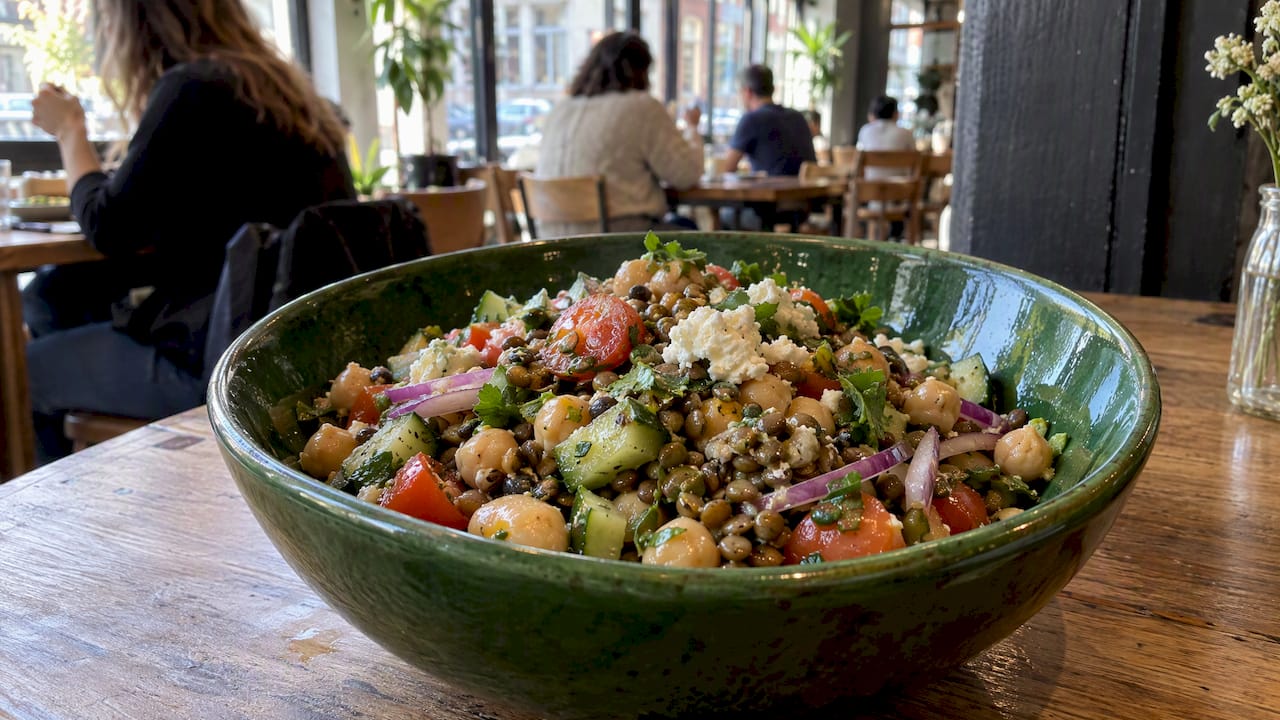


Legumes turn a side salad into a meal. Chickpeas, lentils, white beans, fava beans and edamame add protein, fiber and body, and they replace the pasta or potatoes you might otherwise reach for. The method is simple: cook them until tender, cool them, dress them while they are still slightly warm, and balance them with something crunchy, something fresh and something acidic. Below you will find which legumes work best, whether canned is fine, a step-by-step base recipe, how to keep them easy to digest, and, because we are a Bruges kitchen, how a legume lunch pairs with our Red Velvet Heart Waffle.
TL;DR
- Chickpeas, green or coral lentils, fava beans, edamame and white beans all work in salads, and dried, canned or jarred versions are all usable.
- Treat legumes as the starch of the salad, and pair them with cereals, nuts, seeds, eggs or dairy for a more complete protein profile.
- Soak dried legumes, discard the soaking water and cook them thoroughly: this lowers antinutrients and the gas many people complain about.
- Dress the legumes while they are still warm, then add raw vegetables and herbs just before serving so they stay crisp.
- Finish the meal with something sweet if you like: our seasonal Red Velvet Heart Waffle is made for exactly that moment.
Table of Contents
- Which legumes work best in a salad
- Dried, canned or jarred: what to buy
- A simple legume salad, step by step
- Combining legumes with vegetables, herbs and dressing
- What a legume salad brings nutritionally
- Making legumes easier to digest
- Our perspective: legumes are the quiet star of a good bowl
- The sweet finish: our Red Velvet Heart Waffle
- Order it instead: bowls, salads and waffles from Wild Foodz
- Using legumes through the week
- FAQ
- Sources
Which legumes work best in a salad
Not every legume behaves the same in a bowl. Some hold their shape, some collapse into a creamy base, and some are best used in small amounts for contrast. The Belgian health insurer MC suggests varying chickpeas, green or coral lentils, fava beans and edamame in salads, often alongside tomatoes, cucumber and radishes. Here is how we think about each one.
| Legume | Texture in a salad | Pairs well with |
|---|---|---|
| Chickpeas | Firm, nutty, holds its shape | Tomato, cucumber, parsley, lemon, cumin |
| Green lentils | Slightly peppery, stays intact | Roasted vegetables, mustard dressing, shallots |
| Coral lentils | Soft, tends to break down | Best folded into a dressing or a warm base |
| White beans | Creamy, mild | Cherry tomatoes, rocket, olive oil, herbs |
| Fava beans | Earthy, slightly sweet | Mint, radish, lemon, soft cheese or a vegan alternative |
| Edamame | Bright, snappy | Cabbage, carrot, sesame, ginger-soy dressing |
A practical rule: pick one legume as the star and, if you want variety, add a second in a smaller amount. A salad with four kinds of beans in equal parts usually tastes muddy.
Dried, canned or jarred: what to buy
All three are fine. According to the MC article, dried legumes keep far longer than canned or jarred ones and are just as healthy as fresh legumes. So the choice is about time and budget, not nutrition.
- Dried: the best texture and the cheapest per portion. They need soaking and cooking, so plan ahead and cook a large batch at once.
- Canned or jarred: the weeknight option. Drain them and rinse well under cold water before they go in the bowl, which also removes the thick liquid some people find hard on the stomach.
- Frozen (edamame, fava beans): quick to thaw, and they keep their color.
If you cook a pot of dried chickpeas or lentils on Sunday, you have the base for three or four lunches. Keep them in the fridge in a closed container, undressed, and add the dressing the day you eat them.
A simple legume salad, step by step
This is the base we would hand a friend. The amounts are a guideline for two main-course portions, so adjust to appetite.
- Prepare the legumes. Use about 2 cups of cooked, drained chickpeas, lentils or white beans. If you start from dried, soak them first and cook them until fully tender (more on that below).
- Make the dressing in the bowl. Whisk 3 tablespoons of olive oil, 1 tablespoon of red wine vinegar or lemon juice, a teaspoon of Dijon mustard, a small crushed garlic clove, salt and pepper.
- Dress the legumes while they are still slightly warm. Warm legumes absorb the dressing much better than cold ones. Let them sit for ten minutes.
- Add the vegetables. Diced cucumber, halved cherry tomatoes, thinly sliced radishes, spring onions or a diced bell pepper all work. Cut them to a similar size as the legumes so every forkful is balanced.
- Add herbs. Parsley, mint, dill or coriander. Be generous: herbs are what keep a legume salad from tasting flat.
- Add a crunch. Toasted seeds or chopped nuts. If you want a guide to seeds, our piece on toasting and storing salad seeds covers how much to add.
- Taste and correct. More acid if it is heavy, more salt if it is dull, more oil if it is dry.
Serve it as it is, over greens, or tucked into a wrap. If you like the wrap idea, see our easy vegan wraps that stay crisp.
Combining legumes with vegetables, herbs and dressing
The MC article points out that legumes can replace starches in salads and go well with vegetables. That framing helps: instead of adding beans on top of a pasta salad, make the legumes the base and build around them.
Balance the flavors
Legumes are mild and slightly starchy, so they need three things to taste lively:
- Acid: lemon juice, vinegar, or a squeeze of orange. Orange juice with red wine vinegar is a classic partner for lentils.
- Fat: olive oil, tahini, avocado or seeds. Fat carries flavor and makes the salad more satisfying.
- Freshness: raw vegetables and herbs, added at the last moment.
Choose the right dressing for each legume
- Chickpeas: lemon, olive oil, cumin and a spoon of tahini.
- Lentils: mustard vinaigrette with shallots.
- White beans: olive oil, lemon zest, garlic and rosemary or thyme.
- Edamame: soy, rice vinegar, sesame oil and grated ginger.
If you wonder which oils to pick and how to protect their flavor, we wrote about seasoning oils for home cooks.
Build a more complete protein
The Superior Health Council of Belgium states that because plant protein quality is lower than that of animal protein, you should diversify by combining legumes with cereals and oilseeds to obtain all the essential amino acids. MC similarly suggests associating legumes with cereals, nuts, seeds, eggs or dairy products. In a salad bowl that means, for example, chickpeas with bulgur and pumpkin seeds, or lentils with quinoa and walnuts. You do not have to eat these at the same bite, and a varied day of eating is what counts.

For ready-made templates, see our complete vegan salad templates and the balanced meal salads that keep you full. If protein is your goal, the 25 g plant protein bowl shows how the numbers add up.
What a legume salad brings nutritionally
Legumes are rich in fiber, plant protein and vitamins, and dried legumes also supply minerals such as iron. That is why Belgian nutrition guidance puts them near the base of its recommendations: the Flemish food triangle places plant-based foods such as legumes, nuts and whole grains at the foundation, for personal health and for a lower environmental impact.
A few honest notes:
- A legume salad is a good building block, not a complete diet. The Superior Health Council says a varied vegetarian diet, supplemented when necessary, can provide all the nutrients a person needs throughout life.
- The same body warns that very restrictive diets built around a narrow range of favorite plant foods raise the risk of deficiencies, particularly during rapid growth phases such as adolescence. If you cook for a teenager or follow a strict plant-based diet, talk to a dietitian or your GP about your overall menu rather than relying on a single dish.
- Cooking matters. The council notes that legumes contain antinutritional substances such as trypsin inhibitors and lectins, which appropriate heat treatment can neutralize or minimize. Never eat raw or undercooked dried legumes in a salad. Canned and jarred ones are already cooked.
Making legumes easier to digest
This is the question that stops many people from ordering or making legume salads at all. The good news is that a few habits help a lot.
- Soak and discard the water. ProVeg Belgium recommends soaking dried legumes, throwing away the soaking water and cooking them thoroughly, and chewing well.
- Start small and stay regular. MC advises beginning with cooked legumes in small quantities and eating them regularly, so your digestive system adapts.
- Peel if you are sensitive. Skinning chickpeas or fava beans can make them easier to digest for people prone to discomfort. It takes patience, but it is worth trying with fava beans especially.
- Walk afterward. ProVeg Belgium suggests that light activity, such as a short walk after a meal, can support the digestion of plant-rich meals.
If you get persistent pain, bloating or other symptoms after eating legumes, see your doctor rather than just cutting them out, as the cause may be something else.
Our perspective: legumes are the quiet star of a good bowl
We cook fresh bowls, salads and wraps every day, with plenty of vegan options, seeds and superfoods. What we see again and again is that people want food that is colorful and satisfying but not heavy. Legumes do that job better than almost anything else: they give a salad staying power without making it dull.
Our advice is practical. Do not aim for perfection, aim for a repeatable habit. Cook one batch, keep it plain, and change the dressing and toppings across the week so you never eat the same lunch twice. Use seeds for crunch, fresh herbs for lift, and a good acid to wake everything up. And when you do not feel like cooking, order a bowl instead of skipping the vegetables.
We also believe in treating yourself. A healthy week does not need to be austere, and a legume-based lunch makes room for a sweet moment afterward, which is where our waffles come in.
— Mawghan
The sweet finish: our Red Velvet Heart Waffle
Here is the part of our kitchen that gets photographed the most. The Red Velvet Heart Waffle is a heart-shaped waffle that we feature seasonally around Valentine’s Day, and it has become the item many of our guests in Bruges ask about first. Red velvet is a cocoa-tinged, deep red cake style rather than a chocolate one, and we explain what that means in Red Velvet and a Hotel Heart Waffle for Bakers.
Why mention a waffle in an article about legumes? Because of how people actually eat. A lunch built on chickpeas, lentils and fresh vegetables is light and full of fiber, and many of our customers pair it with one shared dessert. A heart-shaped waffle fits that role: it is made to be split between two people, and it travels well for takeaway or delivery.
If you are planning a Valentine’s treat, you will find the details in Valentine’s Heart Waffles in Bruges: The Red Velvet Heart and a sharing guide in Share the Red Velvet Heart. For plant-based sweets, see vegan desserts in Bruges, and if you eat gluten free, read our notes on vegan gluten free waffles that survive 20 to 30 minutes in transit. Because ingredients and allergens matter, always check the current menu or ask us before you order.
A simple pairing idea: a chickpea and herb salad, a bowl with seeds, and one Red Velvet Heart Waffle in the middle of the table. Savory, fresh, then sweet.

Order it instead: bowls, salads and waffles from Wild Foodz
When you do not have time to soak beans, we do the work. Our fresh bowls, salads and wraps are prepared daily, with vegan options featuring superfoods and seeds, for takeaway or delivery through Deliveroo, UberEats and Takeaway.com, plus our own delivery within a 20-mile radius. We have recently moved to a new central location in Bruges with direct ordering.
See what is on offer on our ordering page, or read how to order vegan bowls in Bruges and try the Red Velvet Waffle.

Using legumes through the week
Once the basics are in place, variety comes from small changes. A few combinations we like:
- Mediterranean: chickpeas, cucumber, tomato, red onion, parsley, lemon and olive oil.
- Lentil and roasted vegetable: green lentils, roasted carrots or beetroot, mustard vinaigrette, walnuts.
- Spring: fava beans, radishes, mint, lemon zest and a spoon of seeds.
- Asian-leaning: edamame, red cabbage, grated carrot, sesame and a ginger-soy dressing.
- Creamy white bean: white beans, rocket, cherry tomatoes, garlic, thyme.
Planning also reduces waste. Gezond Leven suggests planning meals and finding ways to use leftovers, and a legume salad is ideal for that: leftover roasted vegetables, a spoon of cooked grains or the last of the herbs all fit in. For a heartier option, our high protein vegan lunch combos show how to turn a legume base into a meal prep routine.
FAQ
How do I make a simple legume salad?
Dress 2 cups of cooked chickpeas, lentils or white beans with olive oil, vinegar or lemon, mustard and garlic while they are still slightly warm. Then add chopped vegetables, fresh herbs and a handful of seeds or nuts. Taste and adjust the acid and salt before serving.
Can I use canned legumes in a salad?
Yes. Canned and jarred legumes are already cooked, so you only need to drain and rinse them. Dried legumes keep longer and are just as healthy, but they need soaking and cooking first, as MC explains.
Why do legumes cause gas, and how do I reduce it?
Most of the problem comes from compounds in the legumes that your gut bacteria ferment. Soak dried legumes, discard the water, cook them thoroughly, chew well and begin with small portions. If symptoms persist, speak with your doctor.
How often should I eat legumes?
Belgian guidance encourages eating them regularly as part of a varied diet, with plant-based foods like legumes at the base of the food triangle. A salad two or three times a week is an easy way to build the habit.
Does a Red Velvet Heart Waffle go with a legume salad?
It does, as a shared dessert after a light, savory lunch. We feature it seasonally around Valentine’s Day, so check our ordering page for the current menu and for ingredient or allergen details.
Sources
- Mille façons d’accomoder les légumineuses, En Marche (MC)
- Voedingsdriehoek, Gezond Leven
- Superior Health Council of Belgium, vegetarian diet advice (2021)
- Plus de légumineuses et moins de gaz, ProVeg Belgium
Leave a Reply